Key takeaways
- The best headsets for simultaneous interpretation combine clear booth audio, a noise-rejecting boom mic, and all-day comfort. Compare three professional picks.
Simultaneous interpretation is one of the most demanding jobs in professional audio. An interpreter sits in a booth for hours, listening to a speaker in one language through the headphones while speaking a translation into a microphone, often with a booth partner working beside them and relaying every few dozen minutes. The best headsets for simultaneous interpretation have to do two jobs at once: deliver the floor audio clearly enough that nothing is missed, and capture the interpreter’s voice cleanly enough that the audience hears every word. A consumer headset built for calls or gaming rarely meets both requirements, because it is not designed for the noise, the long shifts, and the console connections of a real interpretation booth.

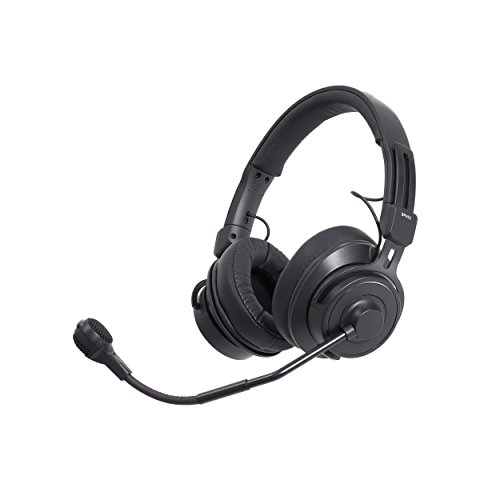
This guide focuses on professional broadcast headsets with boom microphones, the style of headset interpreters actually wear at the console. All three models below are wired, closed-back designs with a broadcast-grade boom microphone, and each one is sold on Amazon US. Because Amazon product pages could not be opened directly at the time of writing, availability should be confirmed on the listing before ordering. What follows is a practical comparison of three headsets that fit the booth, with the specifications that matter most for interpreters.
At a Glance
| Product | Best for | Key spec |
|---|---|---|
| Audio-Technica BPHS1 | Proven all-round booth work | Closed-back over-ear, cardioid dynamic boom mic, 65 ohm headphones |
| Sennheiser HMD 300 PRO-XQ-2 | Maximum isolation and hearing protection | Closed-back over-ear, supercardioid boom mic, up to 32 dB passive attenuation |
| Audio-Technica BPHS2 | Lighter on-ear comfort for long shifts | On-ear design, hypercardioid dynamic boom mic, 45 mm drivers |
How to Choose a Headset for Simultaneous Interpretation
Microphone pattern and placement. The microphone is the most important part of an interpreter headset, because the audience hears only what it picks up. Look for a directional dynamic microphone with a cardioid, hypercardioid, or supercardioid pattern, which focuses on the voice directly in front of it and rejects sound from the sides and rear. That rejection matters in a booth shared with a partner, where the microphone must not pick up the other interpreter’s voice. A flexible gooseneck boom that can be positioned close to the mouth, and ideally switched to either side, lets each interpreter set the mic exactly where it works best.
Isolation and hearing protection. Interpreters need to hear the floor feed without booth noise, audience noise, or their partner bleeding through. Closed-back ear cups that seal around the ear are the standard choice, and published passive attenuation figures tell you how much outside sound the headset blocks. Some models add switchable limiting that caps sudden loud peaks, which protects hearing during long days of unpredictable program audio. Open-back headphones, however good they sound for music, are the wrong tool in a booth.
Comfort across long shifts. Interpretation sessions run for hours, and interpreters rotate in shifts that can stretch across a full conference day. Weight, clamping force, earpad material, and ear cup size all decide whether a headset disappears on the head or becomes a distraction by the second hour. Over-ear cups spread pressure more evenly, while lighter on-ear designs reduce weight at the cost of some isolation. Memory foam earpads and a padded, adjustable headband are worth looking for, as are field-replaceable pads, since earpads wear out long before the headset itself.
Console compatibility. A booth headset does not plug into a phone. It connects to an interpreter console or a mixer, so the connectors matter. Check whether the headset terminates in a 3-pin XLR microphone connector and a 6.3 mm headphone plug, whether it uses a multi-pin connector that needs a specific cable, and whether the headphone impedance suits the console’s output. A headset that needs a cable the booth does not have is a headset that cannot be used, no matter how good it sounds.
Durability and serviceability. Booth headsets are shared equipment in many setups, passed between interpreters and packed into cases between events. Metal construction, a sturdy boom, replaceable earpads, and included windscreens all extend service life. A headset with spare parts available and a cable that can be swapped when it fails will outlast a cheaper sealed unit many times over.
Speech intelligibility. A headset tuned for music is not automatically tuned for speech. For interpretation, the useful range is the human voice, and a microphone with a frequency response shaped for vocal clarity, plus headphones that reproduce speech without heavy bass coloration, helps the interpreter catch quiet consonants and accented speech. Published frequency response figures for both the microphone and the headphones give a fair indication of how a headset is tuned.
Product Reviews
Audio-Technica BPHS1
ASIN: B003D87JI2
The Audio-Technica BPHS1 is a long-standing broadcast headset and a natural fit for the interpretation booth. It is a closed-back, circumaural design with a dynamic cardioid microphone mounted on a flexible gooseneck boom, built for on-air announcing, sports commentary, and interviews. The microphone uses neodymium magnets and is tuned for natural, highly intelligible vocal reproduction, which is exactly what an interpretation audience needs. The boom can be positioned on either ear cup, so left- and right-handed interpreters can set it up the same way.
Published specifications list the headphone frequency response at 20 Hz to 20 kHz with 65 ohm impedance and 100 dB sensitivity, while the microphone covers 40 Hz to 20 kHz with a 560 ohm impedance. The ear cups are closed-back and circumaural, sealing around the ear to keep booth noise out, and the enclosure uses aluminum in its construction. It ships with a 3.3 m cable that ends in a 3-pin XLR connector for the microphone and a 6.3 mm plug for the headphones, plus three windscreens and a spare connector screw. The listed weight is 264 g, light enough for extended wear without the neck strain heavier broadcast headsets can cause.
For interpreters, the BPHS1’s strengths are its balance and its track record. The cardioid microphone rejects enough off-axis sound for a shared booth, the closed-back cups provide solid isolation, and the XLR and 6.3 mm terminations plug straight into most interpreter consoles and mixers. The detachable cable design means a damaged cable does not end the headset’s life. Its main limitations are that it is a wired headset with a fairly long fixed cable to manage in a small booth, and it has no built-in hearing protection limiting for sudden loud peaks.
Pros:
– Cardioid dynamic boom microphone tuned for vocal intelligibility
– Closed-back over-ear cups with good isolation
– Standard XLR microphone and 6.3 mm headphone connectors
– Lightweight at 264 g for long shifts
– Detachable cable, replaceable windscreens included
Cons:
– Wired design with a long cable to manage in tight booths
– No switchable peak limiting for hearing protection
– No USB or wireless option for remote setups
Best for: Interpreters who want a proven, straightforward booth headset that connects directly to standard consoles.
Sennheiser HMD 300 PRO-XQ-2
ASIN: B07G4JHTFV
The Sennheiser HMD 300 PRO-XQ-2 is the flagship of Sennheiser’s broadcast headset line and the most protective headset in this guide. It is a closed, circumaural headset built around linear sound reproduction optimized for speech intelligibility, with a dynamic supercardioid boom microphone that captures the voice in detail even in loud environments. The microphone can be worn on either the right or the left side, and the split headband design spreads pressure to reduce fatigue during long sessions.
Its standout feature is ActiveGard, a switchable limiting system that caps sound pressure peaks above 110 dB to protect hearing, while the closed-back design provides up to 32 dB of passive noise attenuation. Published specifications list a headphone frequency response of 60 Hz to 25 kHz, 64 ohm impedance, 108 dB sensitivity, and a maximum sound pressure level of 123 dB with ActiveGard off. The supercardioid microphone covers 80 Hz to 16 kHz with a 300 ohm impedance, and the XQ-2 version includes the connection cable with XLR and 6.3 mm terminations. The published weight is 606 g, noticeably heavier than the other headsets here, which is the trade-off for its robust build and thick padding.
For interpretation work, the HMD 300 PRO-XQ-2 suits interpreters who work in noisy venues, large conference halls, or booths near live sound, where its isolation and hearing protection earn their keep. The supercardioid microphone offers the tightest off-axis rejection of the three headsets in this guide, which helps in a shared booth. The weight is the main drawback, and interpreters who wear it for a full day should check the fit carefully, since a heavy headset becomes a burden over a long shift. It is also worth noting that the base HMD 300 PRO model is sold without a cable, so the XQ-2 variant with its included cable is the one to look for.
Pros:
– Supercardioid boom microphone with excellent off-axis rejection
– Up to 32 dB passive noise attenuation
– Switchable ActiveGard hearing protection above 110 dB
– Microphone can be worn on either side
– Linear sound reproduction optimized for speech
Cons:
– Heavy at 606 g, which can cause fatigue on very long days
– The base model ships without a cable, so the XQ-2 variant matters
– Higher-end build comes with a more demanding fit
Best for: Interpreters working in loud venues who need maximum isolation and hearing protection.
Audio-Technica BPHS2
ASIN: B07CNR479N
The Audio-Technica BPHS2 is the newer, lighter sibling of the BPHS1, redesigned as an on-ear headset for broadcasters and communications work. Where the BPHS1 uses large over-ear cups, the BPHS2 uses on-ear earpads with memory foam, which reduces weight and heat buildup during long sessions. It keeps a boom-mounted dynamic microphone, this time with a hypercardioid pattern for tighter focus on the voice, and the flexible gooseneck can be mounted on either side of the headset.
Published specifications list 45 mm drivers with a headphone frequency response of 15 Hz to 28 kHz, 38 ohm headphone impedance, and 102 dB sensitivity. The microphone covers 50 Hz to 14 kHz with a hypercardioid pattern, 550 ohm impedance, and a sensitivity of -57 dB. The listed weight is 250 g, the lightest of the three headsets in this guide. The earpads, headband pad, and temple pad are field-replaceable, and the BPHS2 family also offers single-ear and condenser microphone variants for different console and intercom setups, although the standard dual-ear dynamic model is the one covered here.
For interpreters, the BPHS2’s appeal is comfort and weight. At 250 g with memory foam pads, it is easy to wear through a full conference day, and the hypercardioid microphone gives it strong voice focus for a shared booth. The trade-off is inherent to the on-ear design: on-ear cups seal less completely than over-ear cups, so isolation is weaker than the BPHS1 or the HMD 300 PRO-XQ-2, and in a noisy booth that can matter. Its lower 38 ohm impedance also makes it easy to drive from a wide range of console and intercom outputs, which is helpful when the booth equipment varies from event to event.
Pros:
– Lightest headset in this guide at 250 g
– Hypercardioid dynamic boom microphone with strong voice focus
– Memory foam earpads, field-replaceable pads
– Low 38 ohm impedance works with many consoles
– Boom can be mounted on either side
Cons:
– On-ear design isolates less than over-ear models
– Less passive noise blocking in loud booths
– Variant range can be confusing when ordering
Best for: Interpreters who prioritize light weight and all-day comfort in quieter booths.
Which One Fits Your Booth
The three headsets here cover different booth conditions rather than a single ranking. The Audio-Technica BPHS1 is the safest all-round choice: a closed-back over-ear design with a cardioid microphone, standard XLR and 6.3 mm connectors, and a long service record in broadcast work. It suits most interpreter consoles and most venues without demanding special setup. The Sennheiser HMD 300 PRO-XQ-2 is the pick for difficult rooms, where its supercardioid microphone, 32 dB of passive attenuation, and ActiveGard limiting protect both intelligibility and hearing, provided its 606 g weight is acceptable for the length of the shift. The Audio-Technica BPHS2 is the comfort pick, lightest of the three and easy to wear all day, best suited to quieter booths where its on-ear design gives up some isolation in exchange for less weight and heat.
Before ordering, confirm two things: the connector on the headset matches the interpreter console or mixer in the booth, and the variant is the one described here, since the BPHS2 family and the HMD 300 line both come in versions with different microphones, ear configurations, or cable arrangements. A headset that fits the booth’s connections and the interpreter’s head will outperform a technically better model that does not.
Frequently Asked Questions
Can I use a regular gaming or call-center headset for simultaneous interpretation?
A gaming or call-center headset can work in a pinch for remote work, but it is rarely ideal in a booth. Most lack the closed-back isolation, the directional broadcast microphone, and the XLR connectivity that interpreter consoles expect. A broadcast headset is built for exactly this combination of listening and speaking at the same time.
Do these headsets work with interpreter consoles?
The BPHS1 and the HMD 300 PRO-XQ-2 terminate in a 3-pin XLR microphone connector and a 6.3 mm headphone plug, which match the inputs found on most interpreter consoles and mixers. Always check the console’s input panel and the headset’s connector list before ordering, since some venues use intercom systems with different terminations.
Should I choose a single-ear or dual-ear headset?
Dual-ear headsets give better isolation and a clearer floor feed, which most booth interpreters prefer. Single-ear models let the interpreter hear the room and their booth partner with the free ear, which some interpreters like for relay work. The BPHS2 family offers a single-ear variant for interpreters who prefer that style.
How do I stop the microphone picking up my booth partner?
Use a directional microphone with a cardioid, hypercardioid, or supercardioid pattern, keep the boom close to your own mouth, and point it away from your partner. A tight pickup pattern and correct mic placement do more than any setting on the console.
What is ActiveGard, and do interpreters need it?
ActiveGard is Sennheiser’s switchable limiting system, which caps sudden loud peaks above 110 dB to protect hearing. Interpreters do not strictly need it, but it is valuable in venues where program audio levels are unpredictable, and it is one of the reasons the HMD 300 PRO-XQ-2 stands out for loud conference work.
Are these headsets also suitable for listeners in the audience?
No, these are interpreter booth headsets with boom microphones, designed for the person doing the translating. Audience members use a receiver with earphones or a lightweight listening headset, which is a different product category with different requirements.
Conclusion
Choosing among the best headsets for simultaneous interpretation comes down to the booth, not the brand name. The Audio-Technica BPHS1 is the dependable all-rounder, with a cardioid boom microphone, closed-back isolation, and standard console connectors. The Sennheiser HMD 300 PRO-XQ-2 adds the strongest isolation and hearing protection for loud venues, at the cost of extra weight. The Audio-Technica BPHS2 trades some isolation for the lightest, most comfortable fit of the three. Match the headset to the noise level of the venue, the connectors on the console, and the length of the shifts, and confirm the listing and variant before ordering. The right headset lets the interpreter forget the equipment entirely and focus on the words.
Disclosure: As an Amazon Associate, we earn from qualifying purchases.