Key takeaways
- Four thread sealants whose Amazon listings state gas use in their own words, from PTFE paste for natural gas and propane to yellow gas tape and an anaerobic option.
A threaded gas connection either seals completely or it leaks, and the product in your hand decides which one you get. The real decision is not paste versus tape in the abstract. It is whether the sealant on the shelf is actually stated for gas service, because plenty of familiar thread sealants are listed for water and air only, and a joint that holds fine on a water line can weep propane or natural gas at a hose fitting.
This roundup is for homeowners connecting a grill, patio heater, garage furnace, or standby appliance with threaded hose fittings, and for anyone replacing a flexible gas connector who wants the joint sealed once. Every product below was chosen because its own Amazon listing names gas among its uses, in the listing’s own wording, and the specifications quoted here come from those product pages rather than from packaging photos or third-party write-ups.
Quick Picks
As an Amazon Associate we earn from qualifying purchases.
| Product | Best for | Key spec from title |
|---|---|---|
| RectorSeal T Plus 2 23631 Pipe Thread Sealant, 1/4 Pint | Everyday natural gas and propane hose fittings at home | PTFE enriched, non-hardening paste |
| Gasoila SS16 Soft-Set Pipe Thread Sealant with PTFE, 1 Pint | A workshop can that covers many gas and fuel fittings over years | Soft-set paste rated in the listing for gases at 3,000 psi |
| Harvey 017065 Gas Line PTFE Thread Seal Tape | A single roll kept in the toolbox for quick gas fitting jobs | Extra heavy, full density PTFE tape especially for gas lines |
| Gasoila FasSeal ATS Anaerobic Thread Sealant, 250 mL | Metal fittings that vibrate, such as shop heaters and compressors | Anaerobic sealant that seals up to 10,000 PSI |
How to Choose
Confirm the listing states gas service in plain words
Start with the listing text, not the color of the can or habits picked up from water plumbing. A sealant belongs on a gas hose fitting only when its product page names the gases it serves, the way the T Plus 2 page lists natural gas and liquified petroleum gases, or the way the Harvey tape page calls itself a sealant for lines carrying natural gas, propane, and butane. If a page talks only about water, drains, and air, treat that silence as a no, even when the brand sells a different, gas-stated product in a similar can.
Match the form to the joint you are sealing
Paste and tape solve the same problem differently. A brush-top paste coats uneven or slightly worn male threads generously and wipes off cleanly, which suits older black iron fittings and larger threads on a furnace whip. Tape wraps fast, stores indefinitely, and leaves nothing to spill, which suits a clean brass fitting on a grill hose. Anaerobic sealant is the third path: it stays liquid until the joint is assembled, then cures in the threads, which suits metal fittings that will not be taken apart every season.
Check the stated pressure and temperature range against your line
Residential gas runs at low pressure, yet the fitting at a regulator outlet or a shop heater sees heat cycles and vibration that a plain water sealant was never described for. Read the ranges the listing actually prints. The Gasoila soft-set paste states a span from -100 to 600 degrees Fahrenheit and a gas pressure figure of 3,000 psi, while the anaerobic FasSeal ATS states -65 to 375 degrees Fahrenheit and sealing up to 10,000 PSI. Numbers like these tell you the product was described with fuel gases in mind, not adapted from a sink repair.
Plan the leak check before you open the can
A good sealant choice includes how you will prove the joint afterward. Keep a spray bottle of soapy water or a listed leak detector ready, pressurize the line only after every fitting is tight, and brush solution over each joint to watch for bubbles. Decide in advance which fittings you will seal and which you will leave alone: flare connections and compression seats seal metal to metal and take no sealant at all, while tapered pipe threads are exactly where paste or tape belongs. Buying the right form becomes easier once the joints are sorted.
The 4 Best Options
RectorSeal T Plus 2 23631 Pipe Thread Sealant, 1/4 Pint

This is the can to reach for when the job is an ordinary home gas hookup: a replacement grill hose, a patio heater line, or a short appliance connector with tapered threads. Its Amazon page states the service list outright, naming natural gas and liquified petroleum gases such as butane and propane among the pipe contents it is recommended for, which removes the guesswork that surrounds general-purpose pastes. The formula is PTFE enriched and non-hardening, so a fitting sealed this autumn can still be broken out with a wrench when the appliance is replaced years later, and the quarter-pint brush-top can suits occasional household jobs.
Specs
- Brand: RectorSeal
- Part number: 23631
- Item form: Paste
- Style: PTFE enriched pipe thread sealant
- Size: 1/4 pint, brush top
- Color: White
- Item weight: 4.8 ounces
- Product dimensions: 2 x 2 x 3.38 inches
- Listing states recommended for pipe carrying natural gas and liquified petroleum gases (butane, propane, mixtures), plus heating oils, refrigerants, and compressed air
Best for: Sealing tapered threads on home natural gas and propane hose fittings that may need to come apart later.
Watch out for: The white color looks like ordinary water-line paste, so store it apart from water-only sealants and check the label before every gas job.
Gasoila SS16 Soft-Set Pipe Thread Sealant with PTFE, 1 Pint

The SS16 is the workshop-sized option, a full pint of soft-set paste with a brush cap, described on its Amazon page with a gas pressure range of 3,000 psi and resistance to fuels including propane, butane, and LPG. That wording matters for mixed-use benches where the same can might seal a gas heater fitting one week and a kerosene or diesel line the next. The paste stays soft rather than curing hard, so joints can be disassembled without heat, and the stated temperature span from -100 to 600 degrees Fahrenheit covers everything from an outdoor propane regulator in January to a fitting near a hot appliance.
Specs
- Brand: Gasoila
- Model: SS16
- Size: 1 pint with brush cap
- Form: Soft-set, non-hardening paste with PTFE
- Temperature range stated in the title: -100 to 600 degrees Fahrenheit
- Gas pressure range stated on the listing: 3,000 psi
- Listing states resistance to gasoline, propane, butane, LPG, kerosene, and diesel oil
- Made in USA, per the listing title
Best for: A garage or maintenance bench that seals gas and fuel threaded fittings regularly and wants one large can.
Watch out for: A pint is a lot of paste for a single grill hookup; the smaller quarter-pint size of the same line suits one-off jobs better.
Harvey 017065 Gas Line PTFE Thread Seal Tape
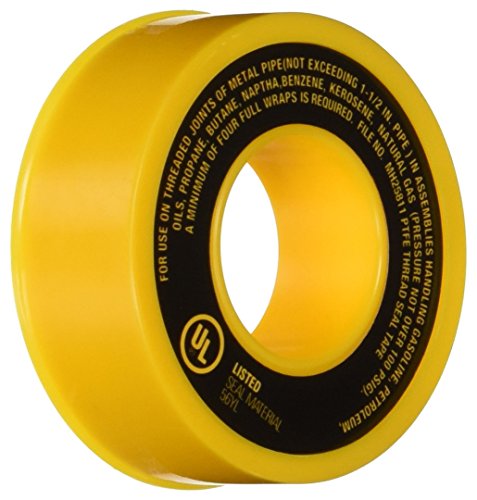
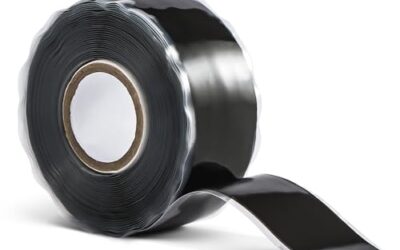
Some people simply prefer tape: no brush, no drips, nothing to skin over in the can. This Harvey roll is the tape version of the same discipline, because its Amazon page describes it as an extra heavy, full density PTFE tape especially for gas lines, and calls it a recommended leakproof sealant for lines carrying natural gas, propane, and butane. The yellow color is a useful signal in a crowded toolbox, marking this as the gas roll rather than thin white water tape. It also permits easy disassembly later, since tape does not bond threads together, which suits seasonal equipment like a propane patio heater disconnected for storage.
Specs
- Brand: Harvey
- Model number: 017065
- Material: Polytetrafluoroethylene (PTFE)
- Color: Yellow
- Form: Thread seal tape, extra heavy and full density per the listing
- Listing states use for lines carrying natural gas, propane, and butane
- Unit count: 1 roll
Best for: Quick, clean sealing of brass and iron gas hose fittings when you want tape instead of paste.
Watch out for: Tape only works on tapered pipe threads; it does nothing for a flare seat or a rubber hose gasket, and wrapping against the thread direction makes it bunch and fail.
Gasoila FasSeal ATS Anaerobic Thread Sealant, 250 mL

FasSeal ATS takes the anaerobic route: applied as a liquid, it cures once the metal fitting is tightened and air is excluded from the threads. Its Amazon title states it is ideal for gas, water, oil, and steam applications, and describes it as high-pressure and vibration-proof, sealing up to 10,000 PSI across a stated range of -65 to 375 degrees Fahrenheit. That combination points it at metal gas fittings that shake in service, such as a unit heater, a generator connection, or equipment near a compressor, where a joint loosening microscopically over time is the failure you are trying to prevent. The 250 mL container suits repeated shop use.
Specs
- Brand: Gasoila
- Product: FasSeal ATS Anaerobic Thread Sealant
- Size: 250 mL
- Temperature range stated in the title: -65 to 375 degrees Fahrenheit
- Sealing pressure stated in the title: up to 10,000 PSI
- Listing title states ideal for gas, water, oil, and steam applications
- Described on the listing as fast curing and vibration-proof
Best for: Metal gas fittings exposed to vibration that will stay assembled for a long service run.
Watch out for: Anaerobic sealants are made for metal threads; do not plan on using this one for plastic fittings, and allow the stated cure before pressurizing the line.
Which One Fits Your Situation
You are swapping a grill or patio heater hose
Pick the RectorSeal T Plus 2. Its listing names liquified petroleum gases, including propane, in plain text, the non-hardening paste tolerates being taken apart when the next hose goes on, and the small brush-top can matches the scale of the job. The Harvey tape is the alternative if your toolbox has no paste and you want a dry, spill-free application on clean brass threads.
You maintain several gas appliances and fuel lines
The Gasoila SS16 pint earns its shelf space here. One can covers heater fittings, a generator hookup, and fuel oil or kerosene threads, and its listing backs that breadth with stated resistance to propane, butane, LPG, gasoline, and diesel oil. Buying the pint also means the can is there in midwinter when a furnace fitting needs resealing, instead of a dried-out small tube.
Your fitting vibrates or lives on shop equipment
Choose the Gasoila FasSeal ATS. A soft paste can walk out of a joint that shakes for years; an anaerobic sealant cures inside the assembled metal threads and is described on its listing as vibration-proof. It is the deliberate choice for a unit heater or compressor-adjacent gas line that you intend to assemble once and leave alone, rather than a hose you swap each season.
You want the simplest possible toolbox answer
Keep one roll of the Harvey yellow gas tape. It needs no cleanup, never dries out, and its color reminds you at a glance that it is the gas-rated roll, not water tape. For a household that seals a gas fitting once every few years, that simplicity beats a can of paste that will sit opened on a shelf between jobs.
Common Mistakes
- Reaching for standard white PTFE tape or a water-only paste on a gas fitting, when the product page never states gas service.
- Sealing a flare or compression seat with paste or tape, even though those joints seal metal to metal and sealant can keep the faces from seating.
- Wrapping tape with the threads instead of against them, so tightening the fitting unwraps the tape and pushes it out of the joint.
- Pressurizing the line without a soapy-water or listed leak-detector check on every joint you touched.
- Using an anaerobic sealant on plastic threads, or opening the gas before an anaerobic joint has had its stated cure time.
Frequently Asked Questions
Can I use regular white plumber’s tape on a gas hose fitting?
Do not treat it as interchangeable. The tape in this roundup is a yellow, full density PTFE tape whose listing states it is made especially for gas lines carrying natural gas, propane, and butane. Standard white tape is sold for water fittings, and its listings generally say nothing about gas. Match the product to the service its own page describes, every time.
Is paste or tape better for a propane hose connection?
Both work when the product is stated for gas, so choose by the joint. Paste coats worn or coarse threads more forgivingly and wipes off during cleanup, which helps on older iron fittings. Tape is cleaner and faster on smooth brass threads and stores forever. What settles the question is the stated gas use on the listing, not the form itself.
Which joints should never get thread sealant?
Flare fittings and compression seats should stay clean and dry, because they seal where two metal faces meet, and paste or tape fragments can hold those faces apart. Hose connections that seal on a rubber gasket work the same way. Reserve sealant for tapered pipe threads, which is the joint style every product in this list is described for.
How do I check a sealed gas joint before calling the job done?
Assemble the fitting, open the supply, and brush soapy water or a listed leak detector fluid over the joint. Growing bubbles mean gas is escaping; close the supply, take the joint apart, clean the threads, and reseal it rather than simply tightening harder. Repeat the check after any adjustment, and if a joint keeps bubbling, stop and have a licensed gas fitter look at it.