Our Short List of 3
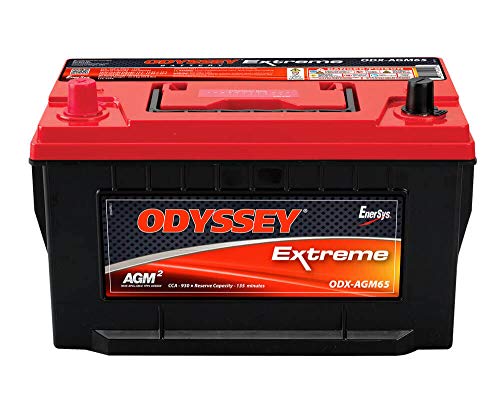
- Group size: 65
- Type: AGM, pure lead construction, per the manufacturer
- Cold cranking amps: 930 CCA
- Reserve capacity: 135 minutes

- Group size: 65
- Type: AGM, pure lead design, per the manufacturer
- Cold cranking amps: 750 CCA
- Capacity: 68 Ah
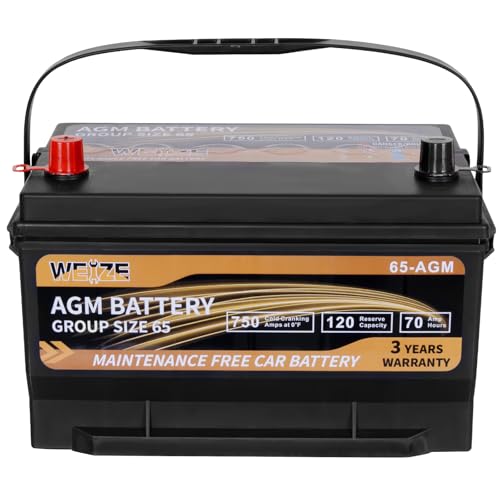
- Group size: 65
- Type: AGM
- Cold cranking amps: 750 CCA
- Capacity: 70 Ah
All 4 Picks at a Glance
| Product | Specs | Action |
|---|---|---|
| 1. Odyssey ODX-AGM65 Extreme Series — Best for Maximum Cranking Power and Reserve |
| Check price on Amazon |
| 2. Interstate MTX-65 Group 65 AGM — Best From a Traditional Battery Brand |
| Check price on Amazon |
| 3. WEIZE Platinum AGM Group 65 — Best Value AGM Specification |
| Check price on Amazon |
 4. ACDelco Gold 65AGMHRC — Best High-Reserve Option From an OEM Brand |
| Check price on Amazon |
Key takeaways
- The best replacement battery for a 2010 Mercury Grand Marquis is a BCI Group 65 battery. Compare four Group 65 AGM options by CCA, reserve capacity and warranty, and check fitment before you buy.
As an Amazon Associate we earn from qualifying purchases.
Affiliate Disclosure: This article contains affiliate links. If you buy through a link on this page, we may earn a commission at no extra cost to you. Specifications are taken from the manufacturers’ and sellers’ published listings, and we have not personally tested these batteries.
The 2010 Mercury Grand Marquis is a full-size, rear-wheel-drive sedan built around Ford’s 4.6-litre V8. It is a simple, durable car, and its battery replacement is equally straightforward — provided you buy the correct size. Fitment references for this model year, including major auto-parts catalogues, list a BCI Group 65 battery for the 2010 Grand Marquis with its 4.6-litre V8, in either a conventional flooded design or an AGM design. Every battery in this guide is a Group 65 battery. That is deliberate: a battery that does not match the car’s group size may not sit correctly in the tray, may not clamp down securely, and may put its terminals in the wrong place for the car’s cables.
This guide compares four Group 65 AGM batteries sold on Amazon US, explains what the numbers on the label mean for this particular car, and walks through the checks to make before and during the swap. One caution applies to the whole page: catalogue fitment is a starting point, not a guarantee. Before you order, compare the new battery’s dimensions and terminal layout with the battery currently in your car, and confirm the fit with the seller’s fitment tool or your owner’s manual.
What the 2010 Grand Marquis Actually Needs
Group size: 65. BCI group size defines the battery’s external dimensions, its terminal type and the position of its terminals. A Group 65 case is roughly 12 inches long, about 7.5 inches wide and about 7.5 inches tall, with top terminals. The Grand Marquis battery tray, hold-down and cable lengths were designed around that footprint for the car’s later model years, and parts catalogues list Group 65 for the 2010 car with the 4.6-litre V8.
Voltage: 12 volts. Every passenger-car battery in this class is a 12-volt unit. There is no choice to make here, but it is worth confirming on any listing, because the same brands sell 6-volt and commercial batteries in similar-looking cases.
Cold cranking amps (CCA): at least the original specification. CCA measures how much current the battery can deliver for starting in cold conditions. Catalogue listings for this car commonly pair it with batteries in the 650 CCA class and above, and every pick in this guide meets or exceeds that level. A higher CCA rating than the original is not a problem; a lower one can mean slow or failed starts on cold mornings, especially as the battery ages.
Reserve capacity (RC): RC is the number of minutes a fully charged battery can carry a moderate electrical load before its voltage falls too low. It matters if the alternator fails, and it also reflects how much margin the battery has for the car’s electrical loads when the engine is off. For a car like the Grand Marquis, which has a modest electrical load by modern standards, reserve capacity is a useful tie-breaker between otherwise similar batteries rather than the main event.
Flooded or AGM? The car was originally supplied with a conventional flooded battery, and a quality flooded Group 65 remains a valid replacement. The four picks below are all AGM (absorbed glass mat) batteries, a sealed, spill-proof design that resists vibration and can replace a flooded battery in this car without modification. A car that requires AGM must keep AGM, but the Grand Marquis does not, so the choice here is about preference and service life, not compatibility.
Our Picks at a Glance
| Product | ASIN | Type | CCA | Reserve capacity | Warranty listed |
|---|---|---|---|---|---|
| Odyssey ODX-AGM65 Extreme Series | B091GV65V7 | AGM | 930 | 135 minutes | 4 years |
| Interstate MTX-65 (Group 65 AGM) | B0CMWXKNZW | AGM | 750 | Not stated in the sources checked | See listing |
| WEIZE Platinum AGM Group 65 | B0G5115BXS | AGM | 750 | 120 minutes | 36 months |
| ACDelco Gold 65AGMHRC | B097J4HMXP | AGM | See listing | High-reserve design | 36 months |
A note on evidence: Amazon blocked direct reads of most of these product pages during our check, returning access-denied responses, so every ASIN above is recorded as a candidate confirmed from indexed Amazon US listings and manufacturer information, not as a live-verified offer. One listing, the ACDelco, returned its manufacturer data table — brand, model 65AGMHRC, part number 88866160 and case dimensions — but did not show a current offer or stock state in the copy we could read. Check availability, the exact rating figures and the fitment tool on the live listing before you buy.
1. Odyssey ODX-AGM65 Extreme Series — Best for Maximum Cranking Power and Reserve
- Group size: 65
- Type: AGM, pure lead construction, per the manufacturer
- Cold cranking amps: 930 CCA
- Reserve capacity: 135 minutes
The Odyssey Extreme Series is the heavy-duty option in this group. Its listed 930 CCA is well above what the Grand Marquis V8 requires, which translates into a large starting margin in cold weather and as the battery ages, and its 135 minutes of reserve capacity is the strongest figure in this comparison. The manufacturer describes thin-plate pure lead construction, which is the basis for both the high cranking figures and the battery’s deep-cycle tolerance — useful if the car is sometimes left with lights or accessories running, or is used for short trips that never quite refill the battery.
The trade-offs are weight and cost class. At roughly 60 pounds, per the listing information, this is a heavy battery to lift into an engine bay, and the Extreme Series sits in the premium tier of Group 65 batteries. The listed warranty is four years, the longest in this guide. For a Grand Marquis that lives in a cold climate, is driven in winter, or is simply expected to stay reliable for years with minimal attention, this is the pick that asks the least of you after installation day.
Choose the Odyssey if you want the largest starting and reserve margin available in the correct group size and you are comfortable handling a heavy premium battery.
2. Interstate MTX-65 Group 65 AGM — Best From a Traditional Battery Brand
- Group size: 65
- Type: AGM, pure lead design, per the manufacturer
- Cold cranking amps: 750 CCA
- Capacity: 68 Ah
Interstate is one of the most established names in replacement car batteries in the United States, and the MTX line is its AGM range. The Group 65 MTX is listed at 750 CCA and 68 Ah, comfortably above the starting requirement of the Grand Marquis V8, in a sealed, spill-proof AGM case. The manufacturer describes the MTX design as packing more lead into the case, with the stated aim of longer service life in demanding use, and positions the line for vehicles with higher electrical accessory loads.
For a 2010 Grand Marquis, the practical appeal is the combination of a mainstream brand, a rating with real headroom over the original specification, and AGM construction that removes any need to check electrolyte levels. As with any battery bought online, confirm how warranty service works for your purchase before you need it: keep the receipt and the listing details, because warranty handling for large batteries sold through marketplaces can differ from the same brand bought through a local dealer network.
Choose the Interstate MTX-65 if you want a conventional, well-supported AGM replacement in exactly the car’s group size, without paying for the extreme ratings of the Odyssey.
3. WEIZE Platinum AGM Group 65 — Best Value AGM Specification
- Group size: 65
- Type: AGM
- Cold cranking amps: 750 CCA
- Capacity: 70 Ah
The WEIZE Platinum Group 65 matches the Interstate’s 750 CCA and pairs it with a listed 70 Ah capacity and 120 minutes of reserve capacity, a specification set that covers the Grand Marquis brief with room to spare. The listing gives full case dimensions and terminal orientation, which makes the pre-purchase comparison against your existing battery easier than with most listings: measure the old battery, check that the positive terminal sits on the same side, and the WEIZE should drop into the tray and meet the cables correctly.
The manufacturer lists a charging voltage range and an operating temperature range in its listing, and describes the battery as suited to start-stop applications. The Grand Marquis does not have start-stop, so that feature is simply unused headroom here rather than a requirement. What matters for this car is the group size, the cranking rating and the reserve figure, and all three are right.
Choose the WEIZE if you want a complete, clearly documented AGM specification in Group 65 and you are willing to buy from a newer online-focused brand rather than a legacy battery name.
4. ACDelco Gold 65AGMHRC — Best High-Reserve Option From an OEM Brand
- Group size: 65
- Type: AGM, high-reserve design
- Model number: 65AGMHRC
- Manufacturer part number: 88866160
ACDelco is General Motors’ parts brand, but its battery range is built to standard BCI group sizes, and the Gold 65AGMHRC is a Group 65 AGM battery like the others in this guide. The HRC in the model name denotes the high-reserve-capacity version of the design, aimed at cars whose electrical loads run with the engine off. In the copy of the Amazon listing we were able to read, the manufacturer table confirmed the brand, the Gold model line, the 65AGMHRC model number, the part number and the case dimensions, which sit within the Group 65 envelope.
Two checks matter more with this pick than with the others. First, because the listing copy we read did not display a current offer, confirm on the live listing that the battery is in stock and sold for the United States market before relying on it. Second, confirm the CCA figure on the live listing and make sure it meets or exceeds the rating of the battery you are replacing; do not assume it from the model name. If both checks pass, this is a sound OEM-brand AGM option in the correct size.
Choose the ACDelco if you prefer an OEM-affiliated brand and a high-reserve design, and you are willing to verify the live listing details carefully before ordering.
How to Confirm Fitment Before You Order
Group size is the headline, but spend five minutes on the details and you will avoid the most common replacement-battery mistakes.
Read the label on the battery in the car. The group size is usually printed on the top or side label. If the existing battery is a Group 65 and the car is unmodified, a Group 65 replacement is the correct starting point. If someone has previously fitted a different size, go by the catalogue fitment for the 2010 Grand Marquis — Group 65 — and by the physical checks below, not by the previous owner’s choice.
Measure the tray space and compare dimensions. A Group 65 case is roughly 12 by 7.5 by 7.5 inches, but listings vary slightly by brand, as the figures in this guide show. Compare the length, width and height in the listing with the space in the tray, and make sure the hold-down clamp will still engage.
Check terminal position. On a top-terminal Group 65, the positive and negative posts must land where the car’s cables expect them. Listings that state terminal orientation — positive on the left, negative on the right, for example — let you compare directly with the old battery. A battery with reversed terminals can leave cables too short to reach, and forcing them risks a poor connection or a short.
Match or exceed the old battery’s CCA. Find the CCA figure on the old battery’s label. Any replacement at or above that figure is suitable on cranking power; all four picks in this guide are listed at 750 CCA or above.
Use the seller’s fitment tool as a second check. Enter the year, make, model and engine — 2010, Mercury, Grand Marquis, 4.6-litre V8 — and confirm the listing reports a fit. Treat the tool as a cross-check on top of the physical checks, not as a substitute for them; fitment tools are occasionally wrong, and the battery in front of you is not.
Swapping the Battery Safely
Replacing this battery is a basic hand-tool job, but a car battery can deliver very high current, so work carefully. Park on a level surface, switch everything off, remove the key, wear eye protection, and keep metal tools from bridging the two terminals.
Disconnect the negative cable first and set it aside where it cannot spring back onto the post; then disconnect the positive cable. Remove the hold-down clamp, lift the old battery out keeping it level — it will weigh roughly 45 to 60 pounds — and clean the tray and cable ends with a terminal cleaner.
Set the new battery in the tray, refit the hold-down so the battery cannot move, then connect the positive cable first and the negative cable last. Tighten the clamps so they cannot be twisted by hand, but do not overtighten them; the posts are soft metal. The clock and radio presets will need resetting, and the engine computer will relearn idle behaviour over the next few drives, which is normal.
Finally, return the old battery for recycling through a parts store or core-return programme; the lead and acid inside should never go into household waste.
Which One Should You Buy?
For most 2010 Grand Marquis owners, the decision is simple. If you want the strongest specification in the correct size and plan to keep the car for years, choose the Odyssey ODX-AGM65. If you want a mainstream AGM replacement from a legacy battery brand, choose the Interstate MTX-65. If you want a fully documented AGM specification with a long reserve figure from an online brand, choose the WEIZE Platinum. If you prefer an OEM-affiliated brand and a high-reserve design, choose the ACDelco Gold 65AGMHRC, after confirming its live listing details.
What all four share matters more than what separates them: the correct Group 65 size for this car, 12-volt AGM construction, and cranking ratings that meet or exceed what the 4.6-litre V8 needs. Buy any of them in preference to a cheaper battery in the wrong group size, because fitment errors — a battery that will not clamp down, or terminals the cables cannot reach — are the failures that actually strand people, not small differences in reserve capacity.
Frequently Asked Questions
What size battery does a 2010 Mercury Grand Marquis take?
Fitment catalogues list a BCI Group 65 battery for the 2010 Grand Marquis with the 4.6-litre V8, in flooded or AGM form. Confirm against the label on the battery in your car and the dimensions of the tray before ordering, because a previous owner may have fitted something different.
Can I use an AGM battery if the car came with a flooded battery?
Yes. An AGM battery of the same group size and equal or higher CCA is a direct replacement in this car, with no modification required. The Grand Marquis does not require AGM, so a quality flooded Group 65 is also acceptable if you prefer one.
How long should a replacement battery last in this car?
Service life depends on climate, trip length and how often the battery is deeply discharged. Hot climates and frequent short trips shorten battery life; long regular drives extend it. The warranty periods listed for the picks in this guide — three to four years — are a reasonable guide to the minimum life the makers expect, not a promise for any individual battery.
Why does the car idle roughly after a battery change?
The engine computer loses its learned adjustments when power is disconnected. Idle quality and shift feel usually settle after a series of normal drives as the computer relearns. If warning lights stay on or the problem persists well beyond that, have the charging system checked rather than assuming the new battery is at fault.