Our Short List of 3

- Best for: Owners of light trucks and Jeeps who want a proven brand and strong sealing.
- 10,000 lb pull capacity
- 12V electric winch, model 103253
- Synthetic rope
- IP68 waterproof

- Best for: Drivers who want high capacity plus a spare wireless remote for safer pulls.
- 13,500 lb recovery winch
- Synthetic rope
- 2 wireless remotes
- IP68 waterproof, 12V electric

- Best for: Mid-size and lighter full-size trucks that need a strong middle rating.
- 9,500 lb PRO Series winch
- Synthetic rope
- 12V waterproof electric winch, 5.5HP motor
- Remote included
All 5 Picks at a Glance
| Product | Specs | Action |
|---|---|---|
| WARN VR EVO 10-S Electric 12V Winch |
| Check price on Amazon |
| OPENROAD Panther Series 3S Recovery Winch |
| Check price on Amazon |
| Rough Country PRO Series 9,500LB Winch |
| Check price on Amazon |
 SINOKING PRO Series 13500 lb Electric Winch |
| Check price on Amazon |
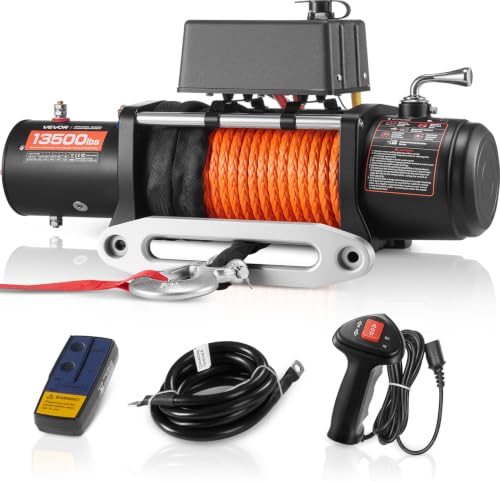 VEVOR Truck Winch 13500 lb |
| Check price on Amazon |
Key takeaways
- Compare five truck winches with published pull ratings, rope types, remotes, and sealing, and match the right winch to your truck and recovery plans.
A truck winch is bought for the worst day, not the average one, so the decision comes down to pull rating, rope type, and how the winch behaves when you are stuck alone. A rating that looks generous on paper can fall short once mud, slope, and a loaded truck add drag, while a winch that is hard to control or slow to rig adds risk at the exact moment you need it to work. The right choice balances rated pull against your truck’s weight, the rope you trust, and controls you can operate in bad weather.
This guide compares five electric winches whose listings state truck fit and a published pull rating, from a 10,000 lb WARN unit for lighter trucks to 13,500 lb models for heavier recovery work. Weekend drivers, overland travelers, and owners who tow or work off road will each find a different match below, and the buying advice explains how to weigh capacity, rope, sealing, and mounting before you choose.
Quick Picks
As an Amazon Associate we earn from qualifying purchases.
| Product | Best for | Key spec from title |
|---|---|---|
| WARN VR EVO 10-S | Light trucks and Jeeps | 10,000 lb pull capacity, synthetic rope |
| OPENROAD Panther Series 3S | All-around truck recovery | 13,500 lb, synthetic rope, 2 wireless remotes |
| Rough Country PRO Series 9,500LB | Trucks needing strong mid-range pull | 9,500 lb, 5.5HP motor, synthetic rope |
| SINOKING PRO Series | High-capacity recovery on a full-size truck | 13,500 lb, 7 HP motor, IP67 waterproof |
| VEVOR Truck Winch | Long rope and dual remotes | 13,500 lb, 3/8 in x 80 ft synthetic rope |
How to Choose
Match Pull Rating to Your Truck
Start with your truck’s loaded weight, including passengers, cargo, fuel, and any trailer tongue weight, and treat the winch rating as a ceiling rather than a working load. Recovery guides commonly suggest a rating well above the truck’s weight because mud suction, grades, and rolling resistance multiply the force needed to move a stuck vehicle. A 10,000 lb winch suits lighter trucks and Jeeps, while heavier full-size trucks and loaded rigs are better served by 12,000 lb or 13,500 lb ratings. If you regularly tow, carry a camper, or drive in deep mud, choose the higher rating rather than planning to compensate with extra rigging.
Steel Cable or Synthetic Rope
Synthetic rope dominates this group for good reason: it is lighter, easier to handle, and stores less energy if it breaks, which matters when you are winching near the truck. Steel cable resists abrasion and heat better and tolerates dragging over rocks, but it is heavier, can develop sharp burrs, and demands gloves every time you handle it. All five picks here use synthetic rope, so compare rope diameter and length instead: a thicker, longer rope gives more reach and margin, while a shorter rope may force you to reposition the truck. Check the fairlead type too, since synthetic rope pairs with a smooth hawse fairlead.
Power, Controls, and Mounting
Every winch here runs on 12V power from the truck, so the practical differences are motor size, remote options, and how the unit mounts to your bumper or mounting plate. A larger motor, measured in horsepower in these listings, generally means stronger sustained pulling, while a smaller motor may heat up sooner on long pulls. Wireless remotes let you stand clear of the cable and watch the pull from a safer angle, and a wired backup keeps you working if the wireless remote fails or its battery dies. Confirm the mount pattern and fairlead fit your bumper before ordering, and plan the wiring route so cables stay clear of heat and moving parts.
Weather Sealing and Recovery Gear
A winch lives on the front of the truck through rain, mud, snow, and road salt, so sealing ratings deserve real attention. IP67 and IP68 ratings in these listings describe protection against dust and water immersion, with the higher number indicating stronger water resistance, while IP55 covers dust and water jets but not immersion. Sealing does not replace maintenance: rinse off mud, inspect the rope for fraying, and keep electrical connections clean and tight. Budget for the extras that make a winch usable, including a tree trunk protector, shackles, gloves, and a damper, because a bare winch without rigging gear cannot perform a safe recovery.
The 5 Best Options
WARN VR EVO 10-S Electric 12V Winch
- Best for: Owners of light trucks and Jeeps who want a proven brand and strong sealing.
- 10,000 lb pull capacity
- 12V electric winch, model 103253
- Synthetic rope
- IP68 waterproof
Owners of light trucks and Jeeps who want a proven brand and strong sealing.
The 10,000 lb rating may fall short for heavy full-size trucks and loaded rigs.
The WARN VR EVO 10-S is the sensible pick for lighter trucks, Jeeps, and larger SUVs whose owners want a proven brand name and a straightforward setup. Its 10,000 lb pull capacity covers most weekend recovery scenarios, and the synthetic rope keeps handling safer and lighter than steel cable. The IP68 waterproof rating is the strongest sealing claim in this group, which matters for a winch that stays mounted through every season. It is the lowest-rated pick here, so owners of heavy full-size trucks or anyone who tows should look at the higher-capacity models instead.
Watch out for: The 10,000 lb rating may fall short for heavy full-size trucks and loaded rigs.
OPENROAD Panther Series 3S Recovery Winch
- Best for: Drivers who want high capacity plus a spare wireless remote for safer pulls.
- 13,500 lb recovery winch
- Synthetic rope
- 2 wireless remotes
- IP68 waterproof, 12V electric
Drivers who want high capacity plus a spare wireless remote for safer pulls.
Confirm the mount and fairlead fit your bumper, since the listing states broad vehicle fit.
The OPENROAD Panther Series 3S pairs a 13,500 lb rating with two wireless remotes, giving you a backup control and the freedom to manage a pull from a safer position. Its synthetic rope and IP68 waterproof sealing match the best protection claims in this group, and the listing states fit for Jeep, SUV, truck, and trailer use. That breadth of stated fit makes it a flexible choice for households with more than one vehicle or for owners who move the winch between rigs. Two remotes also reduce the chance that a dead remote ends a recovery day early, though you should still keep the wired option in mind.
Watch out for: Confirm the mount and fairlead fit your bumper, since the listing states broad vehicle fit.
Rough Country PRO Series 9,500LB Winch
- Best for: Mid-size and lighter full-size trucks that need a strong middle rating.
- 9,500 lb PRO Series winch
- Synthetic rope
- 12V waterproof electric winch, 5.5HP motor
- Remote included
Mid-size and lighter full-size trucks that need a strong middle rating.
The 9,500 lb rating sits below the 13,500 lb models for the heaviest trucks.
The Rough Country PRO Series sits between the lighter WARN and the 13,500 lb models, with a 9,500 lb rating and a 5.5HP motor for sustained pulling. Its synthetic rope keeps weight down and handling safer, and the listing states fit for Jeeps and trucks with a remote included. That middle rating suits mid-size and lighter full-size trucks that see regular off-road use without the weight and power demands of the heaviest recovery jobs. It is a balanced pick when you want more margin than a 10,000 lb unit offers for lighter rigs but do not need the top rating in this group.
Watch out for: The 9,500 lb rating sits below the 13,500 lb models for the heaviest trucks.
SINOKING PRO Series 13500 lb Electric Winch
- Best for: Full-size trucks and demanding recovery work where motor size and dual controls matter.
- 13,500 lb electric winch, 12V
- Synthetic rope
- 2-in-1 wired and wireless remote
- Waterproof IP67, 7 HP motor
Full-size trucks and demanding recovery work where motor size and dual controls matter.
IP67 sealing is a step below the IP68 ratings of the WARN and OPENROAD picks.
The SINOKING PRO Series brings the largest motor claim in this group, a 7 HP motor, together with a 13,500 lb rating and a 2-in-1 wired and wireless remote. Having both control types in one package removes the single-point-of-failure worry that comes with wireless-only setups, and the IP67 waterproof rating covers heavy rain and splashing. Its listing states fit for Jeep, SUV, truck, and trailer, so it suits full-size trucks that carry heavy loads or tow. The combination of motor size and dual controls makes it the most capable-feeling pick here for demanding recovery work.
Watch out for: IP67 sealing is a step below the IP68 ratings of the WARN and OPENROAD picks.
VEVOR Truck Winch 13500 lb
- Best for: Drivers who value long rope reach and dual remotes for extended pulls.
- 13,500 lb electric truck winch, 12V DC
- 3/8 in x 80 ft synthetic rope
- Aluminum fairlead
- Wireless and wired remote control
Drivers who value long rope reach and dual remotes for extended pulls.
IP55 sealing is weaker than the IP67 and IP68 ratings of the other picks.
The VEVOR Truck Winch stands out for rope reach, pairing a 13,500 lb rating with a 3/8 in x 80 ft synthetic rope and an aluminum fairlead. Longer rope means more anchor options and fewer repositioning stops during a long pull, and the wireless and wired remote combination covers both convenience and backup. The listing names it a truck winch directly and states off-road, SUV, Jeep, trailer, and boat towing use, so its stated fit is broad. Its IP55 waterproof rating is the lowest sealing claim here, so owners in very wet climates should weigh that against the rope length advantage.
Watch out for: IP55 sealing is weaker than the IP67 and IP68 ratings of the other picks.
Which One Fits Your Situation
For a Daily Driver That Sees Weekends Off Road
Choose the WARN VR EVO 10-S if your truck is light and your off-road trips stay close to help. Its 10,000 lb rating handles common stuck scenarios, the synthetic rope is easy to manage, and the IP68 sealing holds up through daily driving weather. You give up the margin of the 13,500 lb models, but you gain a proven brand and a simpler setup that suits occasional use rather than constant heavy recovery.
For Heavy Trucks and Deep Recovery Work
Choose the SINOKING PRO Series or the OPENROAD Panther Series 3S when your truck is heavy, loaded, or regularly worked in deep mud. Both carry 13,500 lb ratings with stated truck fit, and their dual remote options let you control long pulls from a safe spot. The SINOKING adds the larger motor claim, while the OPENROAD adds a second wireless remote, so pick based on whether motor size or remote redundancy matters more to you.
For Solo Trips Far From Help
Choose a 13,500 lb model with dual controls, such as the SINOKING PRO Series or the VEVOR Truck Winch, when you travel alone beyond easy rescue. Dual remotes remove a common failure point, and the VEVOR adds rope length for distant anchors. Carry full rigging gear, a charged remote, and a backup plan, because no winch replaces preparation when you are the only rig on the trail.
For a First Winch on a Modest Setup
Choose the Rough Country PRO Series if this is your first winch and your truck sits in the middle weight range. Its 9,500 lb rating and 5.5HP motor give real recovery capability without jumping to the heaviest class, and the included remote keeps the setup simple. Learn rigging basics, practice in a safe spot, and add tree protectors and shackles before your first real recovery.
Common Mistakes
- Buying a winch rated below your truck’s loaded weight and expecting rigging tricks to close the gap.
- Choosing steel cable habits for a synthetic rope, including dragging it over sharp edges without protection.
- Ignoring the sealing rating on a winch that lives outdoors through every season.
- Skipping rigging gear such as a tree trunk protector, shackles, and gloves.
- Mounting the winch without confirming the bumper pattern, fairlead fit, and wiring route first.
Frequently Asked Questions
What pull rating does my truck need?
Base the rating on your truck’s loaded weight, including passengers, cargo, fuel, and tongue weight, then choose a winch rated well above that figure. Mud, slopes, and rolling resistance multiply the force needed, so a rating that only matches the truck’s weight will struggle in recoveries. Lighter trucks and Jeeps can use a 10,000 lb winch, while heavier full-size trucks are better served by 13,500 lb ratings.
Is synthetic rope better than steel cable for trucks?
Synthetic rope is lighter, easier to handle, and stores less energy if it breaks, which makes it the safer everyday choice for most truck owners. Steel cable resists abrasion and heat better but is heavier and can develop sharp burrs that cut gloves and hands. All five winches here use synthetic rope, so protect it from sharp edges and inspect it for fraying after hard pulls.
Do I need a wireless remote for a truck winch?
A wireless remote is not required, but it lets you stand clear of the cable and watch the pull from a safer angle, which matters on uneven ground. A wired backup is valuable insurance if the wireless remote fails or runs out of power mid-recovery. The SINOKING and VEVOR picks include both control types, while the OPENROAD includes two wireless remotes.
How do I maintain a winch mounted on my truck?
Rinse off mud and road salt, inspect the rope for fraying or damage, and keep electrical connections clean and tight. Check the fairlead for burrs that could abrade synthetic rope, and test the winch and remotes regularly rather than discovering a fault during a recovery. Store rigging gear dry and replace any strap, shackle, or rope that shows wear before relying on it again.