Our Short List of 3

All 4 Picks at a Glance
| Product | Specs | Action |
|---|---|---|
 1. Renogy Deep Cycle AGM Battery 12 Volt 100Ah — best overall | Check price on Amazon | |
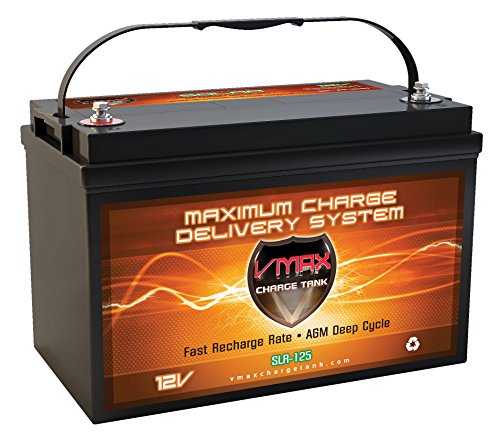
| 2. VMAXTANKS VMAX SLR125 AGM Deep Cycle Battery 12V 125Ah — most capacity in one case | Check price on Amazon | |
| 3. WEIZE 12V 100Ah Deep Cycle AGM Battery, Group 31 — best value Group 31 | Check price on Amazon | |
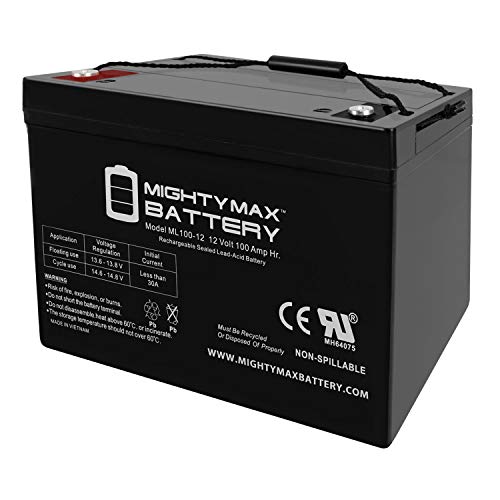 4. Mighty Max Battery ML100-12 12V 100Ah SLA AGM — best for Group 27 boxes and backup duty | Check price on Amazon |
Key takeaways
- The best AGM deep cycle batteries compared: Renogy 100Ah, VMAXTANKS SLR125 125Ah, WEIZE 100Ah Group 31 and Mighty Max ML100-12, with specs, sizing and charging guidance.
As an Amazon Associate we earn from qualifying purchases.
Affiliate Disclosure: This article contains affiliate links. If you buy through a link on this page, we may earn a commission at no extra cost to you. Product specifications are taken from the manufacturers’ listings and product pages; we do not claim to have personally tested these batteries.
Quick answer
An AGM deep cycle battery is the right choice when you want lead-acid simplicity — no watering, no venting worries in normal use, tolerance of rough handling — with storage that can be cycled daily in an RV, a solar bank, a boat or a backup system. The four picks below are all true 12-volt AGM deep cycle batteries, not starting batteries in disguise. The Renogy 100Ah is the most rounded choice for most buyers, the VMAXTANKS SLR125 gives the most capacity in a single Group 31 case, the WEIZE 100Ah Group 31 is the value pick in the same footprint class, and the Mighty Max ML100-12 suits smaller Group 27 battery boxes and backup roles. Which one is “best” depends on your battery box dimensions, how many amp-hours you actually use overnight, and whether you plan to wire batteries in series or parallel.
How we chose
Every pick here had to meet the same tests. It must be a genuine absorbed glass mat (AGM) deep cycle battery — designed for repeated discharge and recharge, not a cranking battery with a deep cycle label. It must be sold on Amazon US under the ASIN recorded with each pick, with published capacity, dimensions and terminal details from the maker. And it must cover one of the common use patterns: 100Ah-class banks for RVs and solar, a larger single battery where space allows one big case, and a Group 27 option for tighter boxes. We excluded lithium batteries entirely — they are a different chemistry with different chargers and a different buying decision — and we excluded dual-purpose marine starting batteries, because a battery optimised to crank an engine is not the deep cycle battery this guide is about.
A note on ratings: AGM cycle life is normally quoted at 50 percent depth of discharge. A 100Ah AGM battery should be treated as roughly 50 usable amp-hours in daily service if you want it to last. Size your bank on usable amp-hours, not the number printed largest on the label, and every pick below will serve longer.
The picks at a glance
| Pick | Capacity | Group size | Best for |
|---|---|---|---|
| Renogy Deep Cycle AGM 100Ah | 100Ah | — (13.1 x 6.9 x 8.6 in) | All-round RV, solar and cabin banks |
| VMAXTANKS VMAX SLR125 | 125Ah | Group 31 | Maximum capacity from one battery |
| WEIZE 12V 100Ah Deep Cycle AGM | 100Ah | Group 31 | Value Group 31 banks, trolling and RV |
| Mighty Max ML100-12 | 100Ah | Group 27 | Smaller boxes, sump and backup duty |
1. Renogy Deep Cycle AGM Battery 12 Volt 100Ah — best overall
Renogy’s 100Ah AGM is the default recommendation in this class for good reasons: the specifications are fully published, the design is aimed squarely at cyclic service, and the support for bank building is clearly stated. The listing describes a 12-volt, 100Ah deep cycle AGM battery with a maximum discharge current of 1100 amps for five seconds, a monthly self-discharge rate below 3 percent at room temperature, and a sealed, maintenance-free case. Renogy states that the battery supports series connections without limitation and parallel connections up to four batteries, which makes it straightforward to build 24-volt or larger 12-volt banks from identical units.
Maker figures put the battery at 63.9 pounds with dimensions of 13.1 by 6.9 by 8.6 inches, with M8 terminal bolts included. The published charging guidance for this class of Renogy AGM — a maximum continuous charging current of 30 amps and sealed lead-acid settings on a charge controller — matches what a typical RV converter-charger or solar controller already provides, so it drops into existing systems without exotic charging hardware. Renogy also publishes a cycle-life figure of 500 cycles at 50 percent depth of discharge, one of the few makers in this price class to put a number in writing.
Choose the Renogy if you are building or refreshing a general-purpose bank for an RV, a cabin or a small off-grid solar setup and want the safest all-round specification sheet. Its watch-outs are the usual AGM ones: it is heavy for its capacity compared with lithium, and like every AGM it will not forgive being left discharged — recharge promptly after deep use and keep it on a maintainer in storage.
2. VMAXTANKS VMAX SLR125 AGM Deep Cycle Battery 12V 125Ah — most capacity in one case
The VMAX SLR125 is the pick when a single battery has to do the work of a battery and a quarter. It is a 12-volt, 125Ah AGM deep cycle battery in a Group 31 case, built by VMAXTANKS for solar, inverter and backup service, and the maker’s own product page presents it specifically as a deep cycle AGM for PV solar panels, smart chargers, wind turbines, inverters and backup power. That extra 25Ah over the 100Ah class translates directly into longer overnight runtime for a fridge, lights and device charging before you reach the 50 percent discharge line.
VMAXTANKS builds its reputation on plate construction and long float and cycle service, and owner reports on the maker’s site describe SLR125 batteries serving for years in conversion vans, RV fleets and home backup systems, including banks that have been cycled hard by rental users. Treat those as owner reports rather than test data, but the pattern is consistent with a battery designed for deep cycle work rather than adapted from a starting battery.
The trade-offs are size and weight: a Group 31 case with 125Ah of lead-acid capacity is a two-hand lift and will not fit battery boxes made for Group 24 or Group 27 batteries, so measure before ordering. Choose the SLR125 when you have one battery bay with Group 31 room and want the longest single-battery runtime of any pick here, or when you are replacing an existing Group 31 deep cycle battery and want a capacity step up without rewiring for a second battery.
3. WEIZE 12V 100Ah Deep Cycle AGM Battery, Group 31 — best value Group 31
The WEIZE 100Ah is a Group 31 deep cycle AGM battery aimed at RV, solar, camping, cabin, marine and off-grid use. Its Amazon US listing (model QS12-100-T) states a 100Ah capacity at 12 volts, a maximum discharge current of 1150 amps, and a self-discharge rate of 3 percent, with dimensions of 12.99 by 6.73 by 8.34 inches and a weight of about 60 pounds. The product description notes a heavy-duty calcium-alloy grid intended to perform in both float and cyclic applications, and the maker states the same bank-building rules as the Renogy: up to four batteries in parallel, with no stated limit in series.
In practice this is the battery for buyers who need a standard Group 31 footprint — the size most larger RV trays, trolling-motor setups and solar cabinets are built around — and want a widely sold, clearly specified AGM without paying for a premium brand name. The Group 31 case also makes it a straightforward replacement when an existing Group 31 battery reaches the end of its life, since cables and hold-downs usually carry over unchanged.
Its watch-outs: confirm the terminal layout against your existing cables before ordering, because Group 31 batteries are sold in more than one terminal configuration across brands, and as with all AGM batteries, use a charger with a proper AGM or sealed lead-acid profile rather than an old unregulated charger that can hold voltage too high and dry the battery out over time.
4. Mighty Max Battery ML100-12 12V 100Ah SLA AGM — best for Group 27 boxes and backup duty
The Mighty Max ML100-12 packs the same 100Ah rating into a smaller Group 27 case measuring 12.09 by 6.65 by 8.48 inches, which makes it the natural pick when the battery box — not the budget — is the constraint. It is a sealed lead-acid AGM battery with internal thread (INT) terminals, UL certification noted in its listing, and deep cycle positioning for solar arrays, trolling motors, RV house banks and backup systems such as sump pump battery backup, a role this model is widely sold for.
The internal thread terminals are a genuine practical difference: cables bolt down into the battery rather than clamping onto posts, which suits permanent installations in solar cabinets and backup boxes where the battery is wired once and left for seasons. The maker’s guidance is equally clear about what the battery is not: it is a deep cycle battery and is not designed to be used as a starting battery, so do not buy it to crank an engine.
Choose the ML100-12 when a Group 27 box rules out the Group 31 picks, or when the job is stationary backup — sump pumps, security systems, small solar banks — where its size, sealed construction and bolt-down terminals fit the installation. If you have room for Group 31 and want maximum bank flexibility, the WEIZE or the Renogy above are the better starting points.
How to choose between these four
Start with the box. Measure the battery tray or box in all three dimensions and check the group size of the battery you are replacing; a Group 31 battery will not drop into a Group 27 box, and forcing fitment invites chafed cables and cracked cases. Next, count usable amp-hours: list what runs overnight, multiply watts by hours, divide by 12 volts, and then double the result — that doubled figure is the AGM nameplate capacity you need if you follow the 50 percent discharge rule. A single 100Ah pick covers a typical RV night of lights, a fridge on efficient settings, a water pump and phone charging; heavier inverter loads point to the 125Ah VMAX or to two batteries in parallel.
Then check charging. Every pick here wants an AGM or sealed lead-acid charge profile, with charging voltage in the mid-14-volt range for cyclic use and a float in the mid-13-volt range, and none of them should be equalised the way flooded batteries are. If your existing charger has an AGM setting, you are set; if it only has a flooded profile with an equalise mode, disable equalisation or replace the charger, because that mode will shorten an AGM battery’s life.
Finally, plan the bank as identical units. Batteries wired together should be the same model, the same age and the same capacity, bought at the same time. Mixing an old battery into a new bank drags the new batteries down to the old one’s level, whichever pick you choose.
Charging and care rules that apply to all AGM deep cycle batteries
Recharge as soon as practical after use; an AGM battery left sitting discharged sulfates and loses capacity permanently. In storage, keep the battery fully charged and either disconnect it or use a maintainer with an AGM profile, topping up every few months — self-discharge figures around 3 percent per month mean a stored battery is quietly draining even with nothing connected. Keep terminals clean and tight, since a loose connection under inverter load heats up and drops voltage. And never install an AGM bank in a sealed, unventilated box with a charger that can overcharge: AGM batteries are sealed and recombine gases in normal service, but a failed charger can still force venting, so ordinary ventilation remains good practice.
Frequently asked questions
How long will a 100Ah AGM deep cycle battery run my RV fridge? It depends on the fridge’s draw, but as a worked example, a fridge averaging 40 watts over the night uses roughly 27 amp-hours in eight hours — comfortably inside the roughly 50 usable amp-hours of a healthy 100Ah AGM, with lights and pump use on top.
Can I replace one battery in an existing pair? You can, but the bank will perform closer to the old battery’s level. Replacing both with identical new batteries is the better spend whenever the budget allows.
Are these batteries suitable for starting an engine? No. All four picks are deep cycle batteries; the Mighty Max listing states the point explicitly. Use a dedicated starting battery for cranking.
Can I mount an AGM battery on its side? Sealed AGM construction tolerates non-upright mounting better than flooded batteries, but follow the individual maker’s instruction — Renogy, for example, directs upright installation except where a specific need justifies otherwise.
Bottom line
For most buyers, the Renogy 100Ah (ASIN: B075RFXHYK) is the best AGM deep cycle battery to start with: fully published specifications, clear bank-building rules and a stated cycle life. Take the VMAXTANKS SLR125 (ASIN: B00ACNO2AO) when one Group 31 battery must carry the longest possible runtime, the WEIZE 100Ah Group 31 (ASIN: B0BGKHQQTP) when you want the standard Group 31 footprint at a value position, and the Mighty Max ML100-12 (ASIN: B00S1QCK94) when a Group 27 box or a stationary backup role decides the question. Measure the box, size on usable amp-hours, charge on an AGM profile, and any of the four will deliver the steady, maintenance-free service that makes AGM the default deep cycle choice for RV, solar and marine banks.