Our Short List of 3

- Best for: Owners of recent Santa Fe models that specify 0W-20.
- Viscosity: 0W-20 (SAE J300)
- Volume: 5 quart (160 fl oz)
- Formula: Triple Action Formula, full synthetic
- Protection figure on listing: 10,000 miles

- Best for: Newer Santa Fe drivers who want the strength-focused 0W-20.
- Viscosity: 0W-20 (SAE J300)
- Volume: 5 quarts
- Manufacturer part number: 1597B2
- Model number: 03124
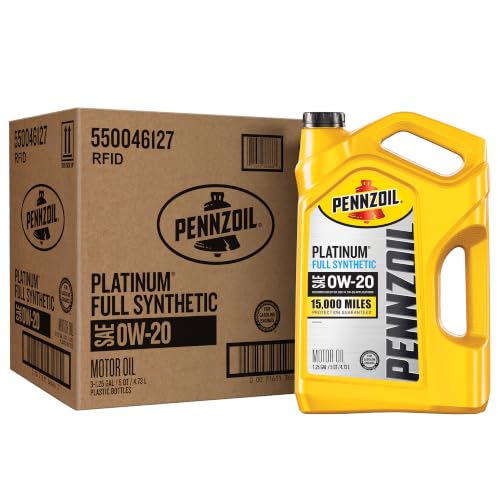
- Best for: Households running more than one 0W-20 vehicle, or owners who stock up ahead.
- Viscosity: 0W-20 (SAE J300)
- Pack: three 5-quart jugs
- Manufacturer part number: 550046127-3PK
- Base oil: made from natural gas (PurePlus gas-to-liquid)
All 5 Picks at a Glance
| Product | Specs | Action |
|---|---|---|
| Mobil 1 Advanced Fuel Economy 0W-20 |
| Check price on Amazon |
| Castrol EDGE 0W-20 |
| Check price on Amazon |
| Pennzoil Platinum 0W-20 |
| Check price on Amazon |
 Castrol EDGE 5W-30 |
| Check price on Amazon |
 Valvoline Restore & Protect 5W-30 |
| Check price on Amazon |
Key takeaways
- Compare five full synthetic motor oils for the Hyundai Santa Fe by grade and jug size, with 0W-20 picks for newer models and 5W-30 picks for older engines.
Choosing oil for a Santa Fe sounds simple until you open the manual and find that the right answer depends entirely on which engine sits under the hood. Hyundai has fitted this SUV with several engine families over the years, and they do not share one grade. Buy the wrong viscosity and even a premium jug is the wrong product, so the grade decision comes first and everything else, formula, credentials and jug size, follows from it.
This roundup is for Santa Fe owners who change their own oil or want to arrive at the shop knowing exactly what should go in: recent models running 0W-20, older generations on 5W-30, and higher-mileage engines that need deposit control. Every pick was chosen from the name and specifications printed on its Amazon listing, with grades and jug sizes matched to the engines this SUV actually uses.
Quick Picks
As an Amazon Associate we earn from qualifying purchases
| Product | Best for | Key spec from title |
|---|---|---|
| Mobil 1 Advanced Fuel Economy 0W-20 | Recent Santa Fe models on 0W-20 | 0W-20, 5-quart jug |
| Castrol EDGE 0W-20 | Newer models that tow or run hot | 0W-20, 5 quarts |
| Pennzoil Platinum 0W-20 | Stocking up or two-car households | 0W-20, case of three 5-quart jugs |
| Castrol EDGE 5W-30 | Older Santa Fe generations on 5W-30 | 5W-30, 5 quarts |
| Valvoline Restore & Protect 5W-30 | Higher-mileage engines with deposits | 5W-30, 5 quart |
How to Choose
Start with the grade printed for your engine
The Santa Fe name covers several engine families, and they do not all drink the same oil. Many recent models with the 2.5-liter engine, plus the hybrid, are built around 0W-20, while a long run of earlier models with the 2.4-liter, the 2.0-liter turbo and the 3.3-liter V6 list 5W-30. The grade stamped on the filler cap and printed in the manual is the one to buy, full stop. A thinner or thicker substitute changes cold-start flow and hot film strength in ways the engine was not calibrated for, so treat brand choice as the second decision, never the first.
Look for full synthetic and current credentials
Every pick in this roundup is a full synthetic, which suits the Santa Fe’s direct-injection engines and their habit of building deposits around intake valves and piston rings. Beyond the words full synthetic, read the credentials printed on the listing: current API categories such as SP and the latest ILSAC grades signal an oil blended for modern turbocharged, direct-injection engines, including protection against low-speed pre-ignition. If a listing hides its credentials behind vague language, treat that as a reason to pick a rival jug whose specifications are printed in full.
Match the jug to your sump and your routine
Santa Fe oil capacity changes with the engine, and several versions take more than a single 5-quart jug once the filter is counted. Check the capacity in the manual before ordering, then decide whether a lone jug, a jug plus a spare quart, or a multi-jug case fits how you work. Owners who change oil for two vehicles, or who like a shelf stocked a year ahead, get real convenience from a case. Everyone else is usually better served by one fresh jug per change, bought as needed.
Decide what the formula should work on
Once grade and credentials are settled, the remaining choice is what you want the oil to emphasize. Some formulas lead with fuel economy and easy cold starts, which suits commuting and winter use. Others are blended around deposit control, aimed at engines that already have years of short trips behind them, and their cleanup claims typically build over several consecutive changes. A third group leans on long protection figures for drivers who run extended highway miles. None of these angles overrides the grade on the cap, but matching the formula to your driving pattern is where the real difference between good jugs shows up.
The 5 Best Options
Mobil 1 Advanced Fuel Economy 0W-20
- Best for: Owners of recent Santa Fe models that specify 0W-20.
- Viscosity: 0W-20 (SAE J300)
- Volume: 5 quart (160 fl oz)
- Formula: Triple Action Formula, full synthetic
- Protection figure on listing: 10,000 miles
Owners of recent Santa Fe models that specify 0W-20.
The same oil also appears in multi-packs under separate listings, so confirm you are ordering the single 5-quart jug.
Mobil 1 Advanced Fuel Economy 0W-20 is the natural starting point for Santa Fe owners whose filler cap calls for 0W-20, which covers most recent 2.5-liter models and the hybrid. The listing centers on fuel economy and a 10,000-mile protection figure, and the Triple Action Formula is Mobil 1’s current mainstream blend rather than a niche variant. The 5-quart jug suits a single change with a small amount left for topping up between services. Cold-start flow is the headline benefit of the 0W winter grade, which matters for short winter trips.
Castrol EDGE 0W-20
- Best for: Newer Santa Fe drivers who want the strength-focused 0W-20.
- Viscosity: 0W-20 (SAE J300)
- Volume: 5 quarts
- Manufacturer part number: 1597B2
- Model number: 03124
Newer Santa Fe drivers who want the strength-focused 0W-20.
Castrol sells several 0W-20 variants, including Extended Performance and High Mileage, under similar names, so check the exact title before ordering.
Castrol EDGE 0W-20 suits the same newer Santa Fe engines as the Mobil 1 pick but takes a different angle: the listing leads with strength, claiming the formula is three times stronger against viscosity breakdown than the leading full synthetic. That positioning fits drivers who tow a small trailer, climb grades in summer heat or simply keep a vehicle for a decade and want the oil film to hold up late in each interval. The jug is the standard 5 quarts, and the printed model number 03124 makes it easy to confirm you have the right variant.
Pennzoil Platinum 0W-20
- Best for: Households running more than one 0W-20 vehicle, or owners who stock up ahead.
- Viscosity: 0W-20 (SAE J300)
- Pack: three 5-quart jugs
- Manufacturer part number: 550046127-3PK
- Base oil: made from natural gas (PurePlus gas-to-liquid)
Households running more than one 0W-20 vehicle, or owners who stock up ahead.
This listing is a case of three jugs rather than one, so check the pack count in the title and your storage space before ordering.
Pennzoil Platinum 0W-20 is sold here as a case of three 5-quart jugs, which changes who it suits: households maintaining two 0W-20 vehicles, or a Santa Fe owner who prefers a stocked shelf to repeated ordering. The listing describes a base oil made from natural gas through Pennzoil’s gas-to-liquid process, and prints a 15,000-mile protection guarantee behind the formula. Pennzoil also notes this grade can serve vehicles currently using 5W-20, though for a Santa Fe the cap grade remains the deciding word.
Castrol EDGE 5W-30
- Best for: Older Santa Fe generations that specify 5W-30.
- Viscosity: 5W-30 (SAE J300)
- Volume: 5 quarts
- Model number: 03084
- Credentials on listing: API SP, ILSAC GF-7, GM dexos1 Gen 3
Older Santa Fe generations that specify 5W-30.
Do not pour it into a Santa Fe that specifies 0W-20; the correct grade beats brand loyalty every time.
Castrol EDGE 5W-30 is the anchor pick for the long run of Santa Fe models whose manuals list 5W-30, covering the 2.4-liter years, the 2.0-liter turbo and the 3.3-liter V6. Its listing leans on the same strength story as the 0W-20 version, citing the Kurt Orbahn test for viscosity breakdown resistance, and prints current credentials including API SP and ILSAC GF-7. For an older Santa Fe that still works hard, this is the jug that pairs the correct grade with a formula built around holding viscosity.
Valvoline Restore & Protect 5W-30
- Best for: Higher-mileage 5W-30 Santa Fe engines with deposit buildup.
- Viscosity: 5W-30 (SAE J300)
- Volume: 5 quart
- Technology: Active Clean and Liqui-Shield
- Listing claim: up to 100 percent piston deposit removal with continued use as directed
Higher-mileage 5W-30 Santa Fe engines with deposit buildup.
The cleanup claim builds over several consecutive changes, so judge the result after a few services rather than one.
Valvoline Restore & Protect 5W-30 is the specialist in this group, aimed at 5W-30 Santa Fe engines that already carry deposits. The listing names two technologies, Active Clean and Liqui-Shield, and claims the oil can remove up to 100 percent of piston deposits when used as directed over four or more consecutive changes, based on adapted Sequence IIIH testing. That makes it a program rather than a one-change fix, best started at the next scheduled service and kept consistent afterward.
Which One Fits Your Situation
You drive a recent Santa Fe and want the default choice
If your Santa Fe is a recent model on 0W-20 and your driving is a normal mix of commuting and family trips, start with the Mobil 1 Advanced Fuel Economy jug. Its listing leads with fuel economy and a 10,000-mile protection figure, and the single 5-quart size matches a one-car routine. The Castrol EDGE 0W-20 is the alternative if you tow or run long highway stretches and prefer the strength-focused formula.
Your Santa Fe is an older model on 5W-30
Owners of earlier Santa Fe generations whose manuals list 5W-30 should begin with the Castrol EDGE 5W-30. It is a mainstream full synthetic in the correct grade, with printed credentials that suit the 2.4-liter, 2.0-liter turbo and V6 engines those years used. Buy a spare quart alongside the jug if your engine’s capacity runs past five quarts with a filter change.
The engine has years of short trips behind it
A Santa Fe that has spent years on school runs and short hops often carries deposit buildup, especially in direct-injection form. The Valvoline Restore and Protect 5W-30 is built for exactly that history, with a cleanup claim that develops over several consecutive changes. It only fits models that specify 5W-30, so 0W-20 owners should instead keep changes on schedule with either 0W-20 pick.
You stock up or maintain two vehicles
If oil changes happen for more than one car in your household, the Pennzoil Platinum case of three 5-quart jugs removes the repeated ordering and keeps the same 0W-20 on the shelf for every change. It also suits a single Santa Fe you plan to keep for years, provided you have dry storage space and the grade matches the cap.
Common Mistakes
- Buying the grade a forum thread recommends for a different model year instead of the grade printed on your own filler cap.
- Pouring in a 5W-30 jug left over from another car when your Santa Fe specifies 0W-20.
- Stretching the interval to match the biggest protection figure on a jug while your driving counts as severe service in Hyundai’s schedule.
- Starting a change without checking capacity, then finding your engine takes more than the five quarts in the jug once the filter is counted.
- Ordering a multi-jug case before confirming the grade, then storing the wrong oil for a year.
Frequently Asked Questions
Which oil grade does my Hyundai Santa Fe need?
Check the grade stamped on the oil filler cap and printed in the owner’s manual for your exact engine. Many recent Santa Fe models specify 0W-20, while plenty of earlier generations list 5W-30. The engine, not the model year alone, decides it, and the correct grade matters more than the brand you pour in.
Can I switch oil brands between changes?
Yes. Oils that share the same grade and meet the same API and ILSAC credentials can be swapped or even mixed in a top-up without issue. What matters is keeping the grade correct and the change interval on schedule. If you move to a deposit-focused formula, give it several consecutive changes before judging the result.
Is one 5-quart jug enough for a Santa Fe oil change?
It depends on the engine. Some Santa Fe versions hold close to five quarts including the filter, while others take noticeably more, so a lone jug can leave you short mid-job. Look up the capacity for your engine in the manual first, and keep a spare quart on hand if your version runs past five quarts.
How often should I change the oil in my Santa Fe?
Follow the interval in Hyundai’s maintenance schedule for your model, and use the shorter severe-service interval if your driving is mostly short trips, dust, towing or stop-and-go traffic. The protection figure printed on a jug is a ceiling for the oil itself, not a promise that your engine can skip scheduled changes.