Our Short List of 3
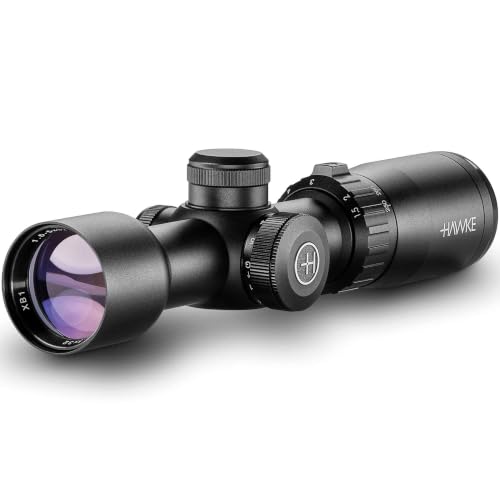
- Best for: Recurve and mid-speed compound bows whose velocity falls between 250 and 425 fps.
- Magnification: 1.5-5x
- Objective lens: 32 mm
- Reticle: XB1 SR, etched glass, red or green illumination in five levels
- Speed selector ring: 250-425 fps

- Best for: Compound crossbows shooting between 300 and 450 fps that mount on a 20 mm rail.
- Magnification: 1.5-5x
- Objective lens: 32 mm
- Speed ring: 300-450 fps
- Reticle: etched glass ballistic, red or green illumination in five levels

- Best for: Households or hunters running two bows at very different speeds who want a single optic to share.
- Magnification: 1.5-5x
- Objective lens: 32 mm
- Speed range: 250-450 fps
- Reticle: etched glass ballistic with circle rangefinder, red or green variable illumination
All 3 Picks at a Glance
| Product | Specs | Action |
|---|---|---|
| Hawke XB1 1.5-5×32 SR |
| Check price on Amazon |
| CVLIFE 1.5-5×32 Crossbow Scope |
| Check price on Amazon |
| UUQ 1.5-5×32 Crossbow Scope |
| Check price on Amazon |
Key takeaways
- Three crossbow scopes with speed rings matched to bolt speed, etched ballistic reticles for 20 to 100 yards, and one-piece tubes built for reverse recoil.
A crossbow scope earns its place through one decision: whether its reticle can be calibrated to the exact speed your bow throws a bolt. Bolt drop between 20 and 100 yards is steep, so if the speed setting on the scope misses your bow’s real velocity, every aiming mark below the center crosshair lands in the wrong spot. The second part of the decision is survival, because a crossbow kicks forward as the string releases, a jolt direction that ordinary rifle optics were never braced against.
This roundup suits three kinds of shooters: owners of slower recurve bows, hunters running mid-speed compound models, and anyone whose bow sits near the top of the current speed range. Each pick below was chosen from its Amazon listing name and stated figures, looking at the calibrated speed window, the reticle pattern printed in the listing, the tube construction, and the mounting hardware the box already contains, so the comparison rests on published specification rather than guesswork.
Quick Picks
As an Amazon Associate we earn from qualifying purchases
| Product | Best for | Key spec from title |
|---|---|---|
| Hawke XB1 1.5-5×32 SR | Slower and mid-speed bows | Speed selector ring 250-425 fps |
| CVLIFE 1.5-5×32 Crossbow Scope | Fast modern compound bows | Speed ring 300-450 fps |
| UUQ 1.5-5×32 Crossbow Scope | One scope across two bows | Speed range 250-450 fps |
How to Choose
Match the Speed Ring to Your Bow’s Real Velocity
The speed ring is the whole point of a dedicated crossbow scope. Turning it rescales the spacing between the reticle’s aiming marks so those marks track your bolt’s arc, and each scope only covers the window printed in its listing. A bow chronographed at 290 fps needs a ring that reaches down to 250 or so, while a 440 fps flagship needs headroom at the upper end. Shoot your hunting-weight bolt through a chronograph if you can, because maker figures often assume a lighter bolt than the one in your quiver, and a ring set from the wrong number shifts every mark past 30 yards.
Read the Reticle Layout Before the Magnification Numbers
Magnification gets the headline, yet the reticle decides whether a 47-yard shot feels calm or improvised. Look for aiming points in even 10-yard steps running from a 20-yard zero out to 100 yards, since that spacing mirrors how crossbow hunters actually judge distance in the woods. Etched glass reticles keep working with the battery removed, which matters on a cold morning sit. Illumination in red and green with several brightness steps helps against dark timber and shadowed hide, but the underlying marks still have to sit at honest intervals, so study the reticle diagram in the listing before anything else.
Confirm the Optic Is Built for Reverse Recoil
A fired crossbow surges forward, the opposite direction of a rifle’s kick, and that forward snap is what loosens mounts and drifts zero on optics designed only for rearward force. Listings for genuine crossbow scopes say so plainly and describe one-piece tube construction, which resists flex better than assembled housings. Shock resistance figures in the listing give a rough durability signal, and sealed, nitrogen-purged bodies keep internal fog from ruining a damp dawn hunt. If a listing never mentions crossbow use at all, treat it as a rifle scope wearing the wrong label and move on.
Check Tube Size, Eye Relief and What the Box Includes
Tube diameter decides which rings fit: the Hawke below rides a 1-inch tube, while the CVLIFE and UUQ use 30 mm and 20 mm ring setups suited to Weaver and Picatinny style rails. Confirm your rail type before ordering, because a scope that cannot mount is just an expensive paperweight. Eye relief varies more than buyers expect, from 3 inches on the Hawke to a longer 4.3 to 4.9 inches on the CVLIFE, and short relief on a hard-kicking bow can crowd your brow. Boxes that already include flip-up caps, rings and a battery save a second order.
The 3 Best Options
Hawke XB1 1.5-5×32 SR
- Best for: Recurve and mid-speed compound bows whose velocity falls between 250 and 425 fps.
- Magnification: 1.5-5x
- Objective lens: 32 mm
- Reticle: XB1 SR, etched glass, red or green illumination in five levels
- Speed selector ring: 250-425 fps
Recurve and mid-speed compound bows whose velocity falls between 250 and 425 fps.
Eye relief is a short 3 inches, so check your shooting posture and stock fit before committing.
Hawke built this scope around crossbow ballistics rather than adapting a rifle design, and the listing shows it. The speed selector ring adjusts from 250 to 425 fps, which reaches the slower recurve and early compound bows that faster-only scopes leave behind, while the XB1 SR reticle is etched on glass with aiming points every 10 yards from a 20-yard zero out to 100. Eleven-layer fully multi-coated lenses and a one-inch mono-tube chassis suit hunters who sit through dim, wet mornings and want a reticle that still reads clearly with the illumination switched off entirely.
CVLIFE 1.5-5×32 Crossbow Scope
- Best for: Compound crossbows shooting between 300 and 450 fps that mount on a 20 mm rail.
- Magnification: 1.5-5x
- Objective lens: 32 mm
- Speed ring: 300-450 fps
- Reticle: etched glass ballistic, red or green illumination in five levels
Compound crossbows shooting between 300 and 450 fps that mount on a 20 mm rail.
Bows slower than 300 fps fall outside the calibrated window, so slower setups should pick a wider-range scope.
The CVLIFE entry aims squarely at current compound bows, with a listing title that pairs a 20 to 100 yard ballistic reticle with a speed ring spanning 300 to 450 fps. Its etched glass reticle lights in red or green across five brightness levels, the 30 mm one-piece tube is machined from aircraft-grade aluminum, and the generous eye relief gives bulky winter clothing and heavy draw weights some breathing room. Flip caps, 20 mm rings, wrenches and two batteries ride in the box, so the scope can go from parcel to rail in one sitting without extra hardware.
UUQ 1.5-5×32 Crossbow Scope
- Best for: Households or hunters running two bows at very different speeds who want a single optic to share.
- Magnification: 1.5-5x
- Objective lens: 32 mm
- Speed range: 250-450 fps
- Reticle: etched glass ballistic with circle rangefinder, red or green variable illumination
Households or hunters running two bows at very different speeds who want a single optic to share.
At 1.5 lb it is the heaviest pick here, which compact and lightweight bows will feel at the front end.
UUQ covers the broadest velocity window of the three, with a listing range of 250 to 450 fps that lets one scope move between an older recurve and a current compound without recalibration headaches. The etched glass ballistic reticle carries a circle rangefinder element arranged around a 50-yard zero, with aiming references running from 20 to 100 yards, and the variable red or green illumination adapts to changing light. The one-piece aerospace-grade aluminum body is O-ring sealed and nitrogen purged, and the listing describes shock resistance up to 1000G, which speaks directly to the forward jolt a crossbow delivers.
Which One Fits Your Situation
Your Bow Shoots Slower Than 300 fps
Older recurves and entry compound bows often land between 250 and 300 fps, a band the CVLIFE cannot calibrate for. The Hawke XB1 reaches down to 250 fps and adds 10-yard marks all the way to 100, while the UUQ starts at the same floor with a wider ceiling if you later upgrade. Either keeps your holdover marks honest at hunting distances.
Your Compound Bow Lives Between 300 and 450 fps
Most current hunting compounds sit in this band, and the CVLIFE was specified for exactly it. Its 300 to 450 fps ring, long eye relief and included 20 mm rings make setup straightforward, and the etched reticle stays visible with the illumination off during bright midday sits in open fields or food plots.
You Rotate Between Two Bows
Sharing one optic between a slow recurve and a fast compound usually means compromising one reticle or the other. The UUQ’s 250 to 450 fps window covers both ends, and its circle rangefinder speeds up re-zeroing after a swap. Keep a note of each bow’s ring setting and turret positions so the changeover takes minutes at the range bench.
You Hunt Tight Timber at First and Last Light
Close shots in dark woods reward low magnification, a wide field of view and a reticle that glows without flaring. The Hawke at 1.5x shows 75 ft of view at 100 yards and its 11-layer coatings serve dim light well, while its etched marks remain usable even if the battery fades mid-season.
Common Mistakes
- Mounting a plain rifle scope and discovering its reticle has no speed calibration, leaving every holdover mark a guess.
- Setting the speed ring from the bow maker’s advertised figure instead of the velocity your actual hunting bolt produces.
- Zeroing at 20 yards and never confirming the lower marks at 40, 60 and 80 yards before the season opens.
- Ordering before checking tube diameter and rail type, then finding the included rings cannot clamp your setup.
- Running the illumination at full brightness in near darkness, which washes out the target behind the glowing reticle.
Frequently Asked Questions
Can I use a regular rifle scope on a crossbow?
You can mount one, but the reticle will not match bolt trajectory, because rifle reticles assume far flatter flight paths and carry no speed calibration. A crossbow also kicks forward, a direction rifle optics are not braced for, so zero can wander. A dedicated crossbow scope solves both problems at once.
How do I set the speed ring correctly?
Zero the center crosshair at 20 yards first, then shoot at 40 or 50 yards using the matching reticle mark. If bolts land low, slow the ring setting down; if they land high, turn it up, repeating until the mark and the impact agree. Confirm at one longer distance before hunting.
What magnification suits shots out to 100 yards?
A 1.5-5x range covers crossbow hunting well. Low power gives the wide view needed for close, moving shots in timber, while 5x steadies aiming on a still target at the far marks. Most crossbow shots happen well inside 60 yards, so huge magnification adds weight without adding practical accuracy.
Does illuminated reticle lighting actually matter?
It matters most in the first and last minutes of legal light, when a black reticle disappears against a dark animal or shadowed brush. Red or green light at a low setting restores contrast without hiding the target. Etched glass designs still show their marks with the battery removed, so illumination is a help rather than a dependency.