Our Short List of 3
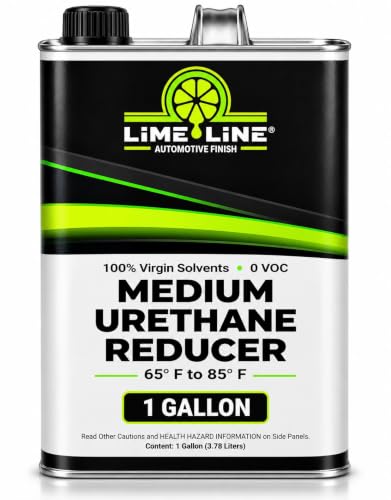

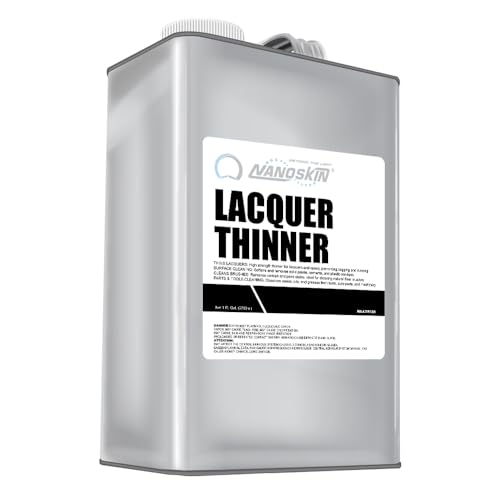
All 3 Picks at a Glance
| Product | Specs | Action |
|---|---|---|
| 1. LiME LiNE Urethane Medium Reducer for Thinning Automotive Basecoats, Primers and Clearcoats, 1 Gallon | Check price on Amazon | |
| 2. Restoration Shop UR70 Medium Urethane Reducer, Gallon, Mid Temperature | Check price on Amazon | |
| 3. Nanoskin Medium-Dry Lacquer Thinner for Paint and Tool Cleaning, 1 Gallon | Check price on Amazon |
Key takeaways
- Best thinner for automotive paint 2: five urethane reducers and lacquer thinners for basecoat and clearcoat work, matched to shop temperature and system.
Disclosure: As an Amazon Associate, this site may earn from qualifying purchases made through links on this page.
Intro
A thinner for automotive paint is not one product. It is two families that do different jobs, and mixing them up is the most common mistake in refinishing. Urethane reducers thin urethane basecoats, primers, and clearcoats, and they come in fast, medium, and slow speeds matched to shop temperature. Lacquer thinners thin lacquer and lacquer-type coatings, and they also clean spray guns, brushes, and tools. A urethane reducer will not thin a lacquer system correctly, and a lacquer thinner is not a substitute for a urethane reducer in a urethane system. The coating maker names the reducer for its system, and the thinner in the can should match that name.
This article covers five thinners, all confirmed as currently selling on Amazon US. Four are urethane reducers in gallon cans, and one is a medium-dry lacquer thinner in a gallon can. The urethane reducers split by speed and temperature range: one fast reducer for cool shops, two medium reducers for the 70 to 85 degree range, and one medium reducer without a narrow temperature window stated on the listing. The lacquer thinner covers lacquer work and tool cleaning. Every pick is a gallon, which is the standard shop size, and every pick states its intended coating system on the listing.
Temperature is the thread that ties the urethane picks together. Reducer speed controls how fast the solvent leaves the film. A fast reducer suits cool conditions, where a slow solvent would stay wet too long and invite runs or dust. A medium reducer suits the common 70 to 85 degree shop range. A slow reducer suits warm conditions, where a fast solvent would flash off before the film levels. Buying the wrong speed for your shop temperature is the quickest way to a rough finish, so match the reducer to the thermometer, not to the shelf.
At a Glance
| Pick | Type | Size | Temperature Range | Best For |
|---|---|---|---|---|
| LiME LiNE Urethane Medium Reducer | Urethane reducer, medium | 1 gallon | Not stated on listing | Basecoats, primers, clearcoats |
| Restoration Shop UR70 | Urethane reducer, medium | 1 gallon | 70 to 85 degrees | Urethane systems, mid-temperature shops |
| Nanoskin Lacquer Thinner | Lacquer thinner, medium-dry | 1 gallon | Not stated on listing | Lacquers, epoxies, tool cleaning |
| High Teck 7720-1 | Urethane reducer, medium | 1 gallon | 70 to 80 degrees | Primers, basecoats, clearcoats |
| LAUCO Fast Urethane Reducer 7210 | Urethane reducer, fast | 1 gallon | 40 degrees and above | Cool shops, high-solids urethane |
How to Choose
Begin with the coating system. Read the technical data sheet for the paint, primer, or clearcoat you plan to spray, and use the reducer that sheet names. Urethane systems take urethane reducers. Lacquer systems take lacquer thinner. Epoxy primers sometimes accept a urethane reducer, and the Restoration Shop UR70 listing states that use explicitly, but that is a property of that product and that system, not a general rule. When the data sheet names a specific reducer, follow it. When it names a speed, match the speed.
Next, match the speed to the shop temperature. Fast reducers suit cool shops, medium reducers suit the 70 to 85 degree range, and slow reducers suit warm shops. The LAUCO pick in this article is a fast reducer rated for 40 degrees and above, which makes it the choice for cool or climate-controlled shops. The Restoration Shop UR70 and the High Teck 7720-1 are both medium reducers for the 70 to 85 and 70 to 80 degree ranges. The LiME LiNE reducer is a medium reducer without a temperature range stated on the listing, so check the label or the maker documentation before mixing it in a cold or hot shop.
Size is simple: all five picks are gallons. A gallon covers a multi-panel job or several smaller jobs, and it is the economical size for anyone spraying more than a single panel. For a single small touch-up, a gallon is more than needed, but the picks here are shop-size products, and the touch-up diluents sold in 5 mL pens are a different product class that does not appear in this article.
VOC rules are the last check. The High Teck reducer is a National Rule VOC product, and the listing states it may not be available in VOC-restricted regions. The Nanoskin lacquer thinner states a VOC content of 24 grams per liter and CARB compliance on the listing. Check the rules for your region before ordering, because a reducer that cannot legally ship to your address will not complete the order, and the rules differ by state and by county.
Safety handling applies to all five picks. These are strong solvents. Work with ventilation, wear the gloves and respirator the label calls for, and keep the cans away from ignition sources. Store the cans sealed and upright, and keep them out of reach of children. The Nanoskin listing warns against use with nylon bristles, because strong solvents can weaken synthetic fibers, so use natural-bristle or solvent-safe brushes for cleaning.
The Picks
1. LiME LiNE Urethane Medium Reducer for Thinning Automotive Basecoats, Primers and Clearcoats, 1 Gallon
The LiME LiNE reducer is a medium-speed urethane reducer in a gallon can, listed for thinning automotive basecoats, primers, and clearcoats. That three-way coverage is the point of the product: one reducer for the basecoat, the primer, and the clearcoat in a urethane system, rather than a different solvent for each stage. The listing describes it as a premium solvent for those three uses, and it is the only pick here that names all three stages in the product title itself.
This listing is also the thinnest in the article, with a single bullet on the product page and no temperature range, mixing ratio, or brand compatibility stated. That thinness is the main weakness of the pick. A medium reducer is normally the right speed for the common shop range, but without a stated temperature window on the listing, confirm the range on the label or with the seller before mixing it in a cold or warm shop. The gallon size matches the other picks, and the product is a straightforward medium reducer for urethane work. For owners who want a single medium reducer for all three stages of a urethane job and are willing to confirm the temperature range on the label, this is the pick. For owners who want the temperature range printed on the listing before ordering, the Restoration Shop UR70 or the High Teck 7720-1 states it directly.
2. Restoration Shop UR70 Medium Urethane Reducer, Gallon, Mid Temperature
Restoration Shop UR70 Medium Urethane Reducer, Gallon, Mid Temperature
The Restoration Shop UR70 is a medium urethane reducer in a gallon can, specified for 70 to 85 degree weather. The listing states it is designed for Restoration Shop and Custom Shop acrylic enamel, acrylic urethane, and urethane basecoat automotive paints, primers, and clearcoat systems, and it may also reduce viscosity in any of the maker’s urethane primers, epoxy primers, and urethane clearcoats. It is described as universal, and the listing states it may also be used to reduce viscosity in many other brands of urethane primers, epoxy primers, and urethane clearcoats.
The maker behind this product has supplied the automotive paint industry since 1974, and the listing states the products are made in the USA, formulated, manufactured, and distributed by the maker itself. The 70 to 85 degree window is the clearest temperature statement among the medium reducers here, and it matches the most common shop conditions. The universal claim is useful for owners who run mixed product systems, but it is still a claim on the listing, so confirm compatibility with your exact coating before mixing a full batch. For a mid-temperature shop running Restoration Shop or Custom Shop coatings, or for a mixed-brand urethane system where the data sheet allows a universal medium reducer, the UR70 is the most clearly specified pick in the article.
3. Nanoskin Medium-Dry Lacquer Thinner for Paint and Tool Cleaning, 1 Gallon
Nanoskin Medium-Dry Lacquer Thinner for Paint and Tool Cleaning, 1 Gallon
The Nanoskin lacquer thinner is the only lacquer product in this article, and it is the only pick that doubles as a cleaner. It is a general-purpose, medium-dry lacquer thinner in a gallon can, formulated for lacquer, lacquer-type products, and a wide range of epoxy finishes. The listing states it thins clear and pigmented lacquers and epoxies, adjusts viscosity to improve flow, and helps reduce sagging or running on vertical surfaces. It also softens hardened or flaky coatings on smooth surfaces, and it cleans brushes, sprayers, tools, and equipment exposed to resins, oils, and greases.
The listing states a VOC content of 24 grams per liter and CARB compliance, which makes it the most clearly documented pick here on the regulatory side. It also warns against use with nylon bristles, because strong solvents may weaken synthetic fibers, so use natural-bristle or solvent-safe brushes when cleaning with it. This pick is not a urethane reducer, and it should not be mixed into a urethane basecoat or clearcoat. It belongs in a lacquer workflow, or on the cleaning shelf beside a urethane workflow. For lacquer work, epoxy thinning, and gun and tool cleaning, it is the pick. For urethane basecoat and clearcoat thinning, choose one of the four urethane reducers instead.
4. High Teck 7720-1 Medium Urethane Reducer, 1 Gallon, 70 to 80 Degree Application Range
High Teck 7720-1 Medium Urethane Reducer, 1 Gallon, 70 to 80 Degree Application Range
The High Teck 7720-1 is a medium-speed urethane reducer in a gallon can, formulated for shop conditions between 70 and 80 degrees. The listing states it helps produce gloss and smooth, even leveling across primers, basecoats, and clearcoats, and that it works with most urethane-based primers, basecoats, and clearcoats from various brands. It is made with virgin solvents, which the listing ties to clean evaporation and consistent performance, and it is classified as a National Rule VOC product.
The 70 to 80 degree window is narrower than the UR70’s 70 to 85 degree window, which makes this the more precise pick for a shop that holds steady in that range. The wide compatibility claim suits owners who run mixed-brand urethane systems. The National Rule VOC classification is the check to make before ordering: the listing states the product may not be available in VOC-restricted regions, so confirm the rules for your address. For a shop that stays between 70 and 80 degrees and runs mixed-brand urethane coatings, this reducer gives the clearest temperature match and the broadest compatibility statement of the medium picks.
5. LAUCO Fast Urethane Grade Reducer, 1 Gallon, for 40 Degrees Fahrenheit and Above
LAUCO Fast Urethane Grade Reducer, 1 Gallon, for 40 Degrees Fahrenheit and Above
The LAUCO 7210 is the fast reducer in this article, rated for 40 degrees Fahrenheit and above. It is a high-performance solvent thinner for urethane and high-solids automotive and industrial coatings, in a gallon can. The listing states it is engineered for cooler spraying conditions, that it reduces viscosity and improves film build in high-solids urethane and topcoat systems, and that it helps regulate spray pattern, minimize overspray, and reduce wasted material.
This is the pick for a cool shop, a climate-controlled shop in winter, or any job where the temperature sits well below the medium-reducer range. A medium reducer in those conditions stays wet too long and invites runs and dust; a fast reducer flashes off at the right pace and lets the film level. The high-solids focus also matters: high-solids coatings carry more material per pass and need a reducer that keeps the viscosity in range without thinning the film too far. The listing frames the gallon size as suited to multi-panel jobs, fleet work, and high-volume use. For cool-condition urethane work, this is the only fast reducer in the article, and it is the pick.
Comparison Table
| Feature | LiME LiNE B0F92ZDKJG | Restoration Shop UR70 B0083JTHRW | Nanoskin B016K08QCW | High Teck 7720-1 B0FVYFPD24 | LAUCO 7210 B0DB66B2ZV |
|---|---|---|---|---|---|
| Type | Urethane reducer, medium | Urethane reducer, medium | Lacquer thinner, medium-dry | Urethane reducer, medium | Urethane reducer, fast |
| Size | 1 gallon | 1 gallon | 1 gallon | 1 gallon | 1 gallon |
| Temperature range | Not stated on listing | 70 to 85 degrees | Not stated on listing | 70 to 80 degrees | 40 degrees and above |
| Stated uses | Basecoats, primers, clearcoats | Urethane paints, primers, clearcoats; epoxy primers | Lacquers, epoxies, tool cleaning | Primers, basecoats, clearcoats | Urethane and high-solids coatings |
| VOC note | Not stated on listing | Not stated on listing | 24 g/L, CARB compliant | National Rule VOC | Not stated on listing |
| Origin | Not stated on listing | Made in USA, since 1974 | Not stated on listing | Not stated on listing | Not stated on listing |
Which One Fits Your Situation
If your shop runs between 70 and 85 degrees and you spray Restoration Shop or Custom Shop coatings, choose the UR70. Its temperature window is the clearest of the medium reducers, and its maker has supplied the trade since 1974.
If your shop holds steady between 70 and 80 degrees and you run mixed-brand urethane coatings, choose the High Teck 7720-1. Its narrower window matches a stable shop, and its compatibility statement covers most urethane primers, basecoats, and clearcoats.
If you need one medium reducer for all three stages of a urethane job and you will confirm the temperature range on the label, choose the LiME LiNE gallon. It names basecoats, primers, and clearcoats in the title, but the listing does not state a temperature range, so the label check matters.
If your shop is cool, or you spray high-solids urethane in winter conditions, choose the LAUCO fast reducer. It is the only fast reducer here, rated for 40 degrees and above, and it is built for high-solids systems.
If you spray lacquer, thin epoxies, or need a cleaner for guns, brushes, and tools, choose the Nanoskin lacquer thinner. It is the only lacquer product here, and it is not a substitute for a urethane reducer in a urethane system.
If your region restricts VOC products, check the rules before ordering the High Teck reducer, and note the Nanoskin lacquer thinner’s CARB compliance and 24 grams per liter VOC content on the listing.
FAQ
Can I use lacquer thinner in a urethane basecoat?
No. Lacquer thinner and urethane reducer are different solvents for different coating systems. Use the reducer the coating’s data sheet names. The Nanoskin lacquer thinner in this article is for lacquer and epoxy work and for cleaning, not for thinning urethane basecoats or clearcoats.
What is the difference between fast, medium, and slow reducers?
Speed describes how quickly the solvent leaves the film. Fast suits cool shops, medium suits the 70 to 85 degree range, and slow suits warm shops. The wrong speed for the temperature gives a rough finish, runs, or solvent trapped in the film.
What temperature should I spray at with a medium reducer?
The UR70 states 70 to 85 degrees, and the High Teck 7720-1 states 70 to 80 degrees. Those windows cover the most common shop conditions. Below that range, a fast reducer like the LAUCO 7210, rated for 40 degrees and above, is the better match.
Can I use the UR70 with other brands of paint?
The listing states the UR70 is universal and may be used with many other brands of urethane primers, epoxy primers, and urethane clearcoats. That is a claim on the listing, so confirm compatibility with your exact coating before mixing a full batch, and follow the coating’s data sheet.
Is a gallon too much for one panel?
A gallon is a shop size. It covers a multi-panel job or several smaller jobs. For a single small touch-up, the touch-up diluents sold in small pens are a different product class. The picks here are for panel work and larger jobs.
Why does the Nanoskin listing warn about nylon bristles?
Strong solvents can weaken synthetic fibers. Use natural-bristle brushes or solvent-safe tools when cleaning with lacquer thinner, and do not soak nylon-bristle brushes in it.
Do I need a respirator when spraying with these thinners?
Yes. These are strong solvents. Work with ventilation, wear the gloves and respirator the label calls for, and keep the cans away from ignition sources. Follow the safety instructions on the label for the product you buy.
Final Take
Five gallon thinners cover the two families that matter in automotive refinishing. The UR70 and the High Teck 7720-1 are the clearly specified medium urethane reducers, split by their temperature windows. The LiME LiNE gallon is the third medium reducer, with the thinnest listing and no stated temperature range, so the label check matters. The LAUCO fast reducer covers cool shops and high-solids urethane. The Nanoskin lacquer thinner covers lacquer work and tool cleaning. Match the reducer to the coating system first, match the speed to the shop temperature second, and check the VOC rules for your region before ordering.